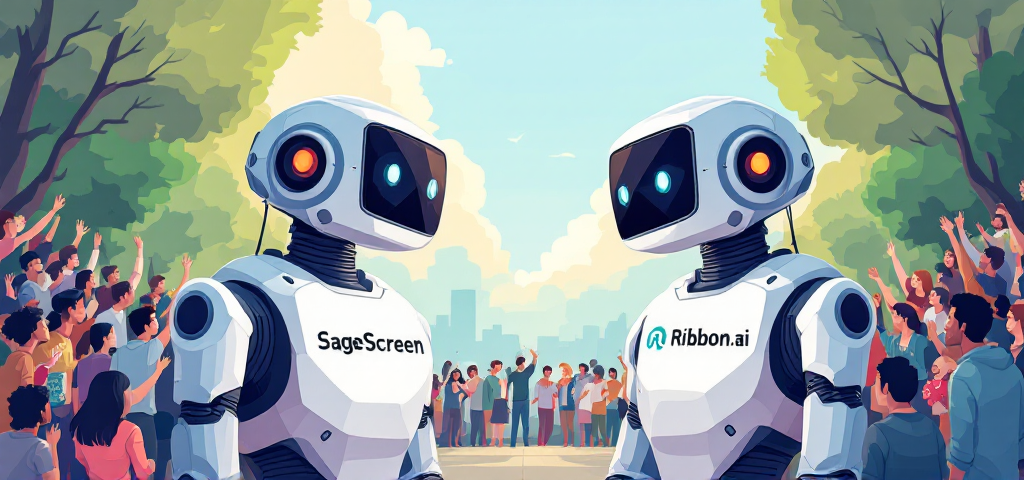

AI interviews are rapidly changing the way we hire. You may have heard the buzz—maybe even felt the anxiety—about artificial intelligence taking over the hiring process. The headlines scream about automation, and you might be wondering if your role as a recruiter is in danger.
Here’s the truth: AI interviews don’t replace recruiters. They replace guesswork.
That’s an important distinction to understand. The misconception that AI will eliminate human recruiters misses the entire point of what this technology actually does. AI interviews aren’t designed to make you obsolete—they’re built to make you better at what you already do.
Think of them as tools that cut through the fog of subjective decision-making, not as replacements for human judgment and relationship-building.
The hiring process has long relied on gut feelings, inconsistent evaluations, and educated guesses. AI interviews change that by bringing structure, data, and consistency into your candidate assessments. You remain the strategist, the relationship builder, the culture guardian. AI simply removes the uncertainty that’s plagued hiring decisions for decades.
Benefits of AI in Recruitment
With the integration of AI in recruitment, we can:
- Leverage subject matter expertise to ensure that candidates possess the required skills and knowledge for specific roles.
- Enhance the quality of hires and streamline the process significantly.
Challenges of AI in Recruitment
However, while AI brings numerous advantages, it also raises concerns about fraud identity in hiring processes. It’s crucial to implement robust measures to mitigate such risks.
Importance of a Step-by-Step Guide
To navigate this new landscape effectively, it’s essential to have a step-by-step guide on how to incorporate AI tools in recruitment without losing the human touch.
Versatility of AI Interviews
Furthermore, AI interviews can be tailored to assess specific skills such as language proficiency, making them a versatile tool in any recruiter’s arsenal.
As we embrace this technological revolution in recruitment, it’s important to remember that the future of AI isn’t just about making things smarter. It’s about making them safer and more reliable too.
The Rise of AI in Recruitment
AI-driven hiring has transformed from a futuristic concept into an everyday reality. At the heart of this revolution sit two powerhouse technologies: natural language processing (NLP) and machine learning (ML). NLP enables interview platforms to understand, interpret, and analyze human speech patterns with remarkable accuracy. ML algorithms learn from thousands of interview interactions, continuously refining their ability to identify top talent based on behavioral analytics and response patterns.
Different Formats of AI Interviews
You’ll encounter AI interviews in three distinct formats:
- Asynchronous video interviews – Candidates record responses to pre-set questions on their own schedule, while AI analyzes verbal and non-verbal cues
- Live AI-assisted interviews – Real-time conversations where AI provides recruiters with instant insights, suggested follow-up questions, and red flags
- Hybrid approaches – Combining automated screening rounds with human-led final interviews for the best of both worlds
Benefits of AI in Recruitment

These tools don’t just collect data—they transform raw candidate responses into actionable intelligence. The automation handles the heavy lifting of initial assessments, parsing through hundreds of applications in hours rather than weeks. You’re looking at a hiring funnel that moves at unprecedented speed while maintaining consistency across every single candidate evaluation.
The technology scores communication skills, problem-solving abilities, and job-specific competencies without the fatigue or inconsistency that plagues manual screening processes. However, it’s crucial to remember that while AI won’t revolutionize hiring, it will significantly streamline the process.
Legal Implications and Compliance Issues
Moreover, when leveraging these advanced technologies, organizations must be aware of the legal implications and compliance issues that may arise during AI-assisted interviews.
Language Testing Mistakes
Additionally, as companies expand their talent search globally, they should be cautious of common language testing mistakes that can be rectified with AI.
Importance of Candidate Landing Page
In this context, having an effective candidate landing page becomes essential. This page serves as a crucial touchpoint for candidates in the recruitment process.
The Role of Design and Structure
Lastly, it’s important to recognize that without proper design and structure in place, as discussed in our article on entropy in organizations, even the most advanced AI systems can lead to chaos and inefficiency.
Replacing Guesswork with Data-Driven Decisions

You’ve probably experienced this: two recruiters interview the same candidate and walk away with completely different impressions. One sees potential, the other sees red flags. Traditional hiring relies heavily on gut feelings, and those feelings shift based on mood, time of day, or even whether the interviewer had their morning coffee.
This subjective evaluation creates massive inconsistencies across your hiring pipeline. One candidate gets grilled on technical skills while another breezes through with easy questions. The scoring criteria? It lives somewhere in each recruiter’s head, changing shape like water.
AI interview platforms deliver objective evaluation through standardized assessments. Every candidate faces identical questions, evaluated against the same criteria. The system doesn’t care if it’s Monday morning or Friday afternoon—consistent scoring happens automatically, thanks to decision scorecards.
The impact on unbiased hiring is substantial. AI removes the unconscious biases that creep into human decision-making. It doesn’t favor candidates who attended the same university or share similar hobbies with the interviewer. The algorithms focus purely on job-relevant competencies.
Data-driven recruitment transforms vague impressions into quantifiable insights:
- Decision accuracy improves by 40% when structured AI data informs hiring choices
- Time-to-hire accelerates by 60% through automated preliminary screening
- Bias-related hiring mistakes drop significantly with standardized evaluation frameworks
You’re not eliminating human judgment—you’re giving it a solid foundation of structured data to work from. This hybrid process combines the best of both worlds: human intuition and machine precision, leading to improved data quality and ultimately transforming recruiting agencies as we move towards 2025 with a focus on lean screening expertise.
Why Recruiters Are Still Essential
Data tells you what a candidate has done. Human judgment reveals who they truly are.
AI is great at analyzing resumes and assessing technical skills, but it struggles when it comes to evaluating the qualities that really matter in a hiring decision. Cultural fit involves understanding your company’s unwritten rules, team dynamics, and the subtle chemistry that determines whether someone will thrive or just get by in your environment. You can’t measure how a candidate lights up when talking about working together on projects or how their values align with your organization’s mission.
Emotional intelligence and interpersonal skills are found in the moments between words—the pause before answering a difficult question, the genuine curiosity in their follow-up questions, the way they handle unexpected challenges during conversation. Recruiters instinctively pick up on these signals, drawing from years of experience in understanding people and workplace dynamics.
The Importance of Human Interpretation

Think about the candidate who seems perfect on paper but whose communication style would clash with your team’s collaborative approach. Or consider the applicant with an unconventional background whose passion and adaptability could bring fresh perspectives your company desperately needs. These subtle judgments require human interpretation.
Moreover, recruiters play a crucial role in managing the entire candidate experience, ensuring that every interaction is positive and beneficial for both parties. This aspect of recruitment is something AI cannot replicate.
The Complementary Relationship Between AI and Recruiters
The relationship between AI and recruiters isn’t competitive—it’s complementary. AI handles the heavy lifting of data analysis while you apply context, intuition, and relationship-building skills that no algorithm can replicate. You’re not being replaced; you’re being equipped with tools that eliminate guesswork so you can focus on what you do best: connecting the right people with the right opportunities.
However, it’s important to note that with great power comes great responsibility. The increasing reliance on AI in recruitment also brings potential legal risks, such as bias in hiring algorithms or violations of candidate privacy. These are areas where human oversight is not just beneficial but necessary.
Enhancing Recruiter Efficiency with AI Assistance

High-volume screening transforms from a time sink into an automated advantage when AI enters your recruitment workflow. Think about the hours you’ve spent parsing through hundreds of resumes, searching for keywords, and conducting first-round phone screens that follow the same script. AI handles these repetitive task automation tasks with precision—filtering candidates based on predefined criteria, conducting preliminary video assessments, and scoring responses against job requirements.
This shift creates breathing room in your calendar. You redirect that reclaimed time toward activities that genuinely need your expertise: building relationships with top candidates, consulting with hiring managers on team dynamics, and crafting compelling offers that seal the deal. Recruiter augmentation doesn’t mean you’re being replaced—it means you’re being upgraded.
With SageScreen’s smart interview tools, the platform conducts structured video interviews, analyzes candidate responses, and delivers actionable insights—all before you’ve had your second coffee. These tools not only handle the grunt work but also ensure interview integrity, allowing you to focus on what you do best: connecting exceptional talent with opportunities. Additionally, SageScreen offers features that streamline the recruitment process such as high-volume screening and repetitive task automation. For a more detailed understanding of how these features work, you can refer to their walkthrough guides.
The Collaborative Powerhouse: Human + AI Hiring Teams
Hybrid interviewing models transform recruitment into a precision sport. Picture this: an AI system conducts initial video assessments, analyzing speech patterns, word choice, and response consistency while flagging top candidates. Your recruiter then steps in for deeper conversations, armed with real-time analysis that highlights strengths and potential concerns. This tag-team approach delivers measurable results.
Companies implementing this collaborative framework report a 26% faster time-to-fill metrics compared to traditional methods. The impact extends beyond speed—attrition rates drop significantly when human judgment validates AI-generated insights. You’re not choosing between technology and people; you’re multiplying their combined effectiveness.
Smarter hiring outcomes emerge when recruiters leverage AI-powered data without abandoning their instincts. One recruiter might notice a candidate’s genuine passion during conversation—something the AI flagged as “high engagement scores.” Another might catch hesitation the algorithm missed. This interplay creates a safety net that catches both quantifiable excellence and intangible potential.
Platforms like SageScreen exemplify this balance, providing recruiters with AI-generated candidate profiles while preserving space for human interpretation and relationship-building that seals exceptional hires. Their dynamic assessments further enhance the recruitment process, making it more efficient and effective.
Addressing Ethical Concerns & Building Trust in AI Interviews

You’ve probably heard the horror stories—AI systems that accidentally screen out qualified candidates or perpetuate the same biases they’re supposed to eliminate. These concerns aren’t unfounded, but they’re also not inevitable. The key lies in how you implement and oversee your AI interview tools.
1. Ensure Algorithm Transparency
Algorithm transparency forms the foundation of ethical AI recruitment. You need to understand exactly how your AI evaluates candidates. Black-box algorithms that can’t explain their decisions create legal risks and erode trust. Look for platforms that provide clear scoring rationales and allow you to audit decision-making processes.
2. Use Diverse Training Data Sets
Diverse training data sets matter just as much. When AI learns from homogeneous data, it amplifies existing workplace imbalances. You want systems trained on varied candidate pools that represent different backgrounds, communication styles, and career paths. This diversity in training directly translates to fairer assessments.
3. Maintain Human Oversight
Human oversight remains non-negotiable. You shouldn’t let AI make final hiring decisions autonomously. Instead, use AI-generated insights as one input among many. Your recruiters should review flagged concerns, validate AI recommendations, and intervene when results seem questionable.
4. Communicate with Candidates Clearly
Candidate communication deserves equal attention. You need to tell applicants when AI evaluates their responses, explain what the technology measures, and provide channels for questions or concerns. Transparency here builds trust and demonstrates your commitment to fair hiring practices. When candidates understand the process, they’re more likely to view AI interviews as legitimate assessment tools rather than impersonal gatekeepers.
Busting Myths: Why AI Won’t Steal Your Job as a Recruiter
Let me be clear: AI is not the Terminator coming for your recruiter job security. It’s more like having a highly efficient assistant who handles the spreadsheet work while you build genuine human connections.
The fear that technology will replace recruiters entirely misses a fundamental truth about the future of recruitment jobs. AI doesn’t eliminate your role—it eliminates the parts of your job you probably hate anyway. Think about it: would you rather spend hours manually screening resumes or actually talking to promising candidates?
Technology augmentation means you become a more powerful version of yourself. When AI handles:
- Initial candidate screening and scoring
- Scheduling coordination and follow-ups
- Data analysis and pattern recognition
- Preliminary skill assessments
You get to focus on what machines can’t replicate—reading between the lines during conversations, sensing when a candidate’s passion is genuine, negotiating offers with empathy, and building relationships that last beyond the hire.
Platforms like SageScreen exemplify this partnership approach. The platform doesn’t sideline you; it supercharges your instincts with data-backed insights. You’re still making the final call, but now you’re doing it with concrete evidence rather than gut feelings alone.
The recruiters who thrive aren’t those who resist AI—they’re the ones who leverage it to become strategic talent advisors rather than administrative gatekeepers. That’s not replacement. That’s evolution.
Conclusion
The future of hiring isn’t about choosing between humans or machines—it’s about using both. Human-AI collaboration changes recruitment from a game of chance into a strategy backed by science. You get the accuracy of data-driven insights combined with the irreplaceable warmth of human judgment.
AI Interviews Don’t Replace Recruiters. They Replace Guesswork. That’s the real recruitment innovation happening right now. When you combine machine learning’s analytical power with your ability to read between the lines, you create hiring magic that neither could achieve alone.
If you’re serious about making smarter hires, try SageScreen today. You’ll discover how AI-powered interviews eliminate the guesswork while amplifying your recruiter superpowers. Your candidates get a fair, consistent evaluation. You get actionable insights that actually help you make confident decisions.
When it comes to finding talent, why settle for guesswork when you can have genius work? The tools are here. The technology works. Your next exceptional hire is waiting.