

AI interviewing legal implications are no longer a distant concern. According to a University of Southern California study, 55% of businesses now use some form of AI in their recruiting process. That number keeps climbing. Companies are chasing the promise of faster, more objective candidate screening and hiring automation. But the legal risks? They’re growing just as fast.
Picture this: A mid-sized tech firm rolls out a new AI-powered video interview platform. Within months, a rejected candidate files a complaint, claiming the system’s algorithmic bias led to employment discrimination. Suddenly, the company is facing not just a PR headache, but a real legal battle. This isn’t a hypothetical. It’s a scenario playing out in courtrooms and HR departments across the country.
So what exactly is AI interviewing? In plain English, it’s when automated systems evaluate job applicants using video analysis, resume screening, or algorithmic assessments. These tools might analyze facial expressions, word choice, or even the tone of a candidate’s voice. The goal is to make hiring more efficient and less subjective. But as more employers adopt these systems, the legal landscape is getting complicated.
Here’s the tension: AI interviewing can help reduce some forms of human bias, but it also introduces new risks. Algorithms can unintentionally reinforce existing inequalities if they’re trained on biased data. And when a system makes a decision, it can be tough to explain exactly how or why. That lack of transparency is a big problem for compliance.
This guide is here to help you make sense of it all. We’ll break down the biggest legal risks, from algorithmic bias to state-specific regulations. You’ll get a clear look at discrimination risks, what laws like Title VII and the ADA require, and how states like Illinois and Colorado are leading the way with new rules. We’ll also cover practical compliance strategies and best practices for building a fair, defensible hiring process.
If you’re an employer, HR leader, or anyone involved in hiring automation, the stakes are high. The right approach to AI interviewing can boost efficiency and help you find better talent. But ignoring the legal implications? That can cost you—sometimes in ways you don’t see coming. It’s not just about following the law. It’s about building trust with candidates and protecting your company’s reputation.
Understanding AI Interviewing Technology and Its Legal Framework
AI interviewing has moved from a futuristic idea to a daily reality for hiring teams. If you’ve applied for a job in the last couple years, there’s a good chance you’ve interacted with some form of automated screening or video interview software. But what’s actually happening behind the scenes? And how do these systems fit into the legal maze that governs hiring? Let’s break down the technology, trace its evolution, and map out the legal guardrails that every employer needs to know.
How AI Interviewing Systems Work
At its core, AI interviewing uses a mix of machine learning algorithms and data analytics to evaluate job candidates. These systems can do much more than just scan resumes. They analyze video interviews, assess voice patterns, and even try to predict personality traits. The goal? To help employers make faster, more objective hiring decisions. But the technology is anything but simple. Here’s what’s typically under the hood:
- Machine learning algorithms: These are the brains of the operation. They’re trained on huge datasets to spot patterns in candidate responses, resumes, and even facial expressions. The more data they process, the more they “learn” what a successful candidate looks like—at least in theory.
- Facial recognition technology: Some video interview software uses facial analysis to interpret non-verbal cues, like eye contact or micro-expressions. This is controversial, especially when it comes to bias and privacy.
- Voice analysis: AI can break down speech patterns, tone, and even word choice. The idea is to gauge confidence, communication skills, or emotional state. But it’s not always clear how accurate or fair these judgments are.
- Personality assessment models: Many platforms use frameworks like the OCEAN or Five-Factor Model (FFM) to predict traits such as openness or conscientiousness. The system might score you on these dimensions based on your answers or behavior in an interview.
- Predictive analytics: By crunching all this data, AI systems try to forecast which candidates are most likely to succeed in a given role. This is where things get tricky, since predictions are only as good as the data and assumptions behind them.
Platforms like SageScreen have started to address some of the biggest concerns in this space. They focus on building AI interviewers that are designed for fairness and compliance, with features like unbiased screening and transparent scorecards. But even the best technology can’t eliminate all risk—especially when the legal landscape is still catching up.
The Evolution from Resume Screening to Decision-Making
It wasn’t that long ago that “AI in hiring” meant keyword-matching software sifting through stacks of resumes. If your resume had the right buzzwords, you’d get a call. If not, you were out of luck. That’s changed dramatically. Today’s AI interviewing systems don’t just screen—they make or influence actual hiring decisions. They watch your video, listen to your voice, and even try to read your body language. Some platforms analyze how quickly you answer, your facial expressions, and the complexity of your language. Others use applicant tracking systems that feed data into machine learning models, which then rank or recommend candidates for interviews or offers.
The shift from simple automation to complex decision-making has opened up new possibilities—and new risks. AI can help reduce some forms of human bias, but it can also introduce new types of discrimination if the algorithms aren’t carefully designed and monitored. Now, employers have to think about not just what the AI is doing, but how and why it’s making those calls. That’s a big leap from the days of basic resume parsing.
Current Federal and State Legal Landscape

The legal framework for AI interviewing is a patchwork of federal and state laws, with new rules popping up every year. At the federal level, the main laws are Title VII of the Civil Rights Act (which bans employment discrimination based on race, color, religion, sex, or national origin), the Americans with Disabilities Act (ADA), and the Age Discrimination in Employment Act (ADEA). The Equal Employment Opportunity Commission (EEOC) enforces these laws and has started issuing guidance on AI and algorithmic decision-making. You can find their latest guidance here.
But the real action is happening at the state level. Illinois and Colorado have both passed laws that specifically target AI in hiring. Illinois was first out of the gate with its Artificial Intelligence Video Interview Act, which requires employers to notify candidates when AI is used, explain how it works, and get consent before analyzing video interviews. Colorado’s Artificial Intelligence Act (CAIA), effective in 2025, goes even further. It covers any employer using high-risk AI systems that affect Colorado residents, regardless of where the company is based. The law requires impact assessments, anti-discrimination measures, and clear disclosures to candidates. Here’s how the federal and state rules stack up:
Law/Regulation | Scope | Key Requirements | Who Must Comply | More Info |
|---|---|---|---|---|
Title VII of Civil Rights Act | Federal | Ban on discrimination by race, color, religion, sex, national origin; applies to AI decisions | All employers with 15+ employees | |
Americans with Disabilities Act (ADA) | Federal | Ban on disability discrimination; requires reasonable accommodation in hiring, including AI systems | All employers with 15+ employees | |
Age Discrimination in Employment Act (ADEA) | Federal | Ban on age discrimination (40+); applies to automated screening and AI | All employers with 20+ employees | |
Illinois Artificial Intelligence Video Interview Act | State (Illinois) | Notice, explanation, and consent for AI video interviews; video deletion rights; demographic reporting (2025) | Any employer using AI video interviews in Illinois | |
Colorado Artificial Intelligence Act (CAIA) | State (Colorado) | Covers high-risk AI in employment; impact assessments; anti-discrimination; candidate disclosures | Any employer affecting Colorado residents |
Other states are watching closely and may follow suit with their own rules. For now, employers need to juggle federal requirements around protected characteristics and Title VII compliance, plus a growing patchwork of state laws. The bottom line? If you’re using AI for hiring automation or candidate screening, you can’t afford to ignore the legal details. The rules are changing fast, and the risks are real.
5 Critical Legal Risks Employers Face with AI Interviewing
1. Algorithmic Bias and Disparate Impact
AI interviewing systems promise to cut human bias, but the reality is a lot messier. These tools learn from historical data, and that data often reflects the same old patterns of discrimination. Algorithmic bias creeps in when training data skews toward certain groups, or when the system “learns” to favor characteristics that correlate with protected characteristics like gender or race. The result? Disparate impact, where candidates from underrepresented backgrounds get screened out at higher rates, even if the process looks neutral on the surface.
The Amazon resume screening debacle is the go-to example. Their AI tool, trained on resumes from a male-dominated tech workforce, started penalizing resumes that included the word “women’s” (as in “women’s chess club captain”). It even downgraded graduates from all-women’s colleges. Amazon scrapped the project, but the lesson stuck: AI can amplify bias if you don’t actively fight it.
Facial recognition technology brings its own set of problems. Studies from MIT and Stanford have shown that these systems are less accurate at identifying people of color, especially women of color. If your AI interview tool uses facial analysis to score candidates, you could be setting yourself up for a Title VII compliance nightmare. The risk isn’t just theoretical. The EEOC has warned that employers are responsible for the impact of their hiring tools, even if a third party built them. Read the EEOC’s guidance here.
Bottom line: If your AI system isn’t built and tested for bias mitigation, you could be facing employment discrimination claims for disparate impact. And those claims are getting easier to prove as regulators catch up.
2. Disability Discrimination and Accommodation Failures
AI interviewing tools often struggle to accommodate candidates with disabilities. The Americans with Disabilities Act (ADA) requires employers to provide reasonable accommodation, but most AI systems aren’t designed with neurodiversity or physical disabilities in mind. That means candidates with autism, speech impediments, or mobility challenges can get unfairly screened out.
- Eye-tracking algorithms may penalize candidates with autism or vision impairments who avoid eye contact.
- Speech analysis tools can misinterpret stuttering or atypical speech patterns as signs of low competence.
- Timed assessments disadvantage people with mobility or cognitive disabilities who need more time.
- Facial recognition technology may not work for candidates with facial paralysis or differences.
- Automated video interviews can be inaccessible to those who rely on assistive technology.
The law is clear: employers must offer alternative assessments or make reasonable modifications if a candidate requests accommodation. But many AI platforms don’t have built-in processes for this. If your system can’t flex, you’re risking ADA violations and potential lawsuits. And it’s not just about legal risk. Failing to accommodate means missing out on talented candidates who think differently or communicate in nontraditional ways.
3. Data Privacy Violations and Consent Issues
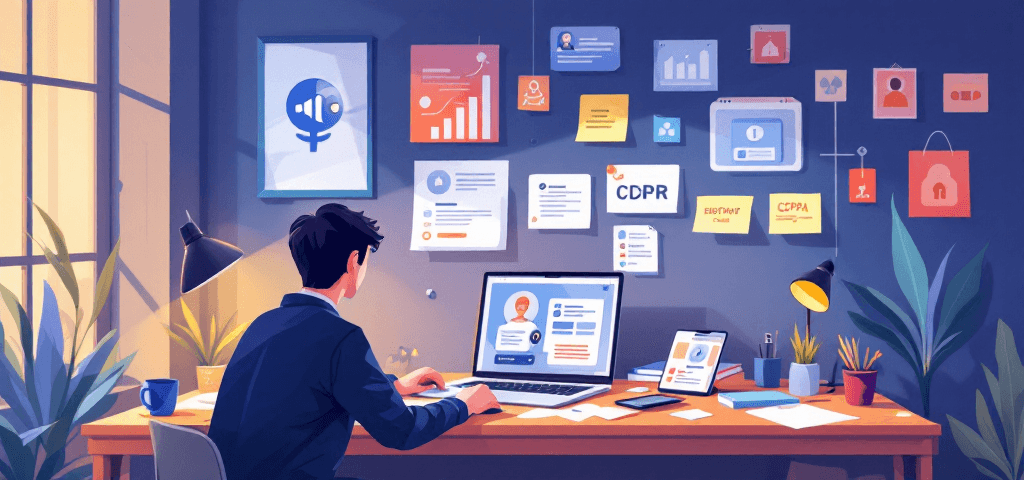
AI interviewing platforms collect a staggering amount of personal data. We’re talking video recordings, voice samples, facial expressions, keystroke patterns, and sometimes even behavioral analytics. That data is gold for improving algorithms, but it’s also a minefield for privacy compliance. Regulations like the General Data Protection Regulation (GDPR) in Europe and the California Consumer Privacy Act (CCPA) in the US set strict rules for how you collect, store, and use candidate data.
Candidates have rights: to know what data you’re collecting, to access or correct it, to opt out, and in some cases, to demand deletion. Consent isn’t just a checkbox. It has to be informed, specific, and freely given. If your process is murky or you don’t have airtight documentation, you’re exposed to regulatory fines and reputational damage.
Jurisdiction | Key Data Rights | Employer Obligations |
|---|---|---|
GDPR (EU) | Access, correction, deletion, data portability, objection | Obtain explicit consent, provide privacy notice, allow data deletion, report breaches |
CCPA (California) | Access, deletion, opt-out of sale, non-discrimination | Disclose data practices, honor deletion/opt-out requests, protect data |
Illinois | Consent for video interviews, right to request deletion | Notify candidates, explain AI use, delete videos on request |
Colorado | Transparency, risk assessment, data protection | Disclose AI use, conduct impact assessments, safeguard data |
If your AI vendor stores data overseas or shares it with third parties, things get even trickier. You need to know exactly where your data goes and who can access it. And if you can’t answer a candidate’s privacy question on the spot, that’s a red flag for regulators.
4. Vendor Liability and Employer Responsibility
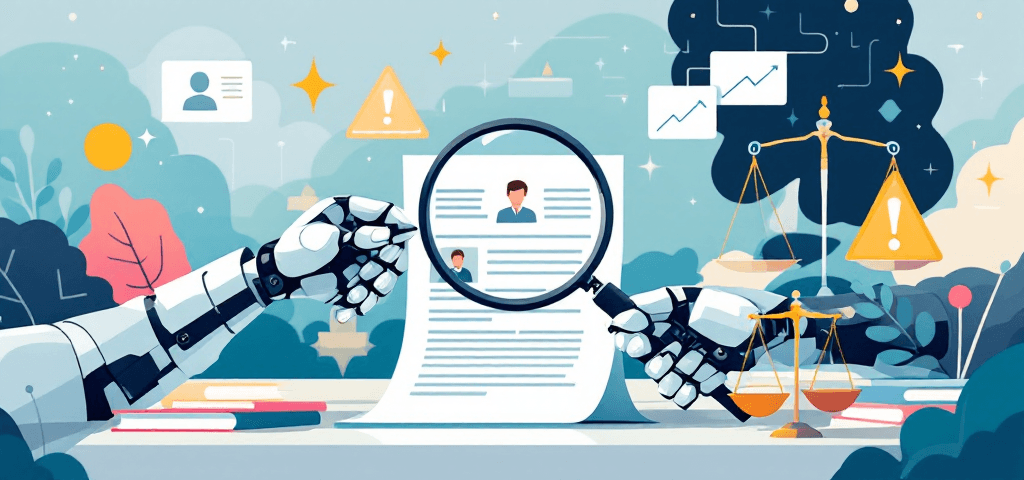
The Mobley v. Workday case changed the game for AI hiring liability. In this lawsuit, a job applicant alleged that Workday’s AI-powered screening tools discriminated against him based on race, age, and disability. The court didn’t just look at the employer. It found that AI vendors like Workday could be considered “employers” under federal discrimination laws if they have enough control over the hiring process. That means both the company using the AI and the vendor who built it can be on the hook for employment discrimination.
This is a big deal. For years, employers leaned on third-party vendors to handle candidate screening, thinking the legal risk stopped at the vendor’s door. Not anymore. Now, if your AI tool screens out candidates in a way that violates Title VII or the ADA, you could be sharing liability with your vendor. And if the vendor’s system is a black box, you might not even know how the decisions are made. Read the Mobley v. Workday case documents.
Employers need to vet vendors for compliance, demand transparency, and make sure contracts spell out who is responsible for what. If you can’t explain how your AI system works or what data it uses, you’re probably not ready for a legal challenge.
5. Transparency and Explainability Requirements
AI interviewing is often a black box. Candidates get rejected, but nobody can say exactly why. Regulators are starting to push back. New laws in Illinois and Colorado require employers to explain how AI tools work, what data they use, and how decisions are made. The EEOC and other agencies are signaling that “we don’t know” isn’t a good enough answer if a candidate claims discrimination.
Transparency isn’t just about legal compliance. It’s about trust. If candidates feel like they’re being judged by a secret algorithm, they’re less likely to apply or accept an offer. And if you can’t explain your hiring decisions, you can’t defend them in court. Employers should be ready to provide clear, plain-language explanations of how their AI systems evaluate candidates, what factors are considered, and what steps are taken to prevent bias.
The push for explainability is only going to get stronger. If your AI vendor can’t provide documentation or audit trails, that’s a sign to look elsewhere. And if your HR team can’t answer basic questions about how the system works, you’re not just risking compliance. You’re risking your reputation.
State-by-State Compliance Requirements: What Employers Must Know
Illinois: The First Mover in AI Interview Regulation
Illinois was the first state to pass a law specifically targeting AI interviewing. The Artificial Intelligence Video Interview Act (AIVIA) set the tone for what compliance looks like in practice. If you use video interview software that relies on AI to evaluate candidates, you need to follow a clear set of rules. And Illinois keeps tightening the screws. The 2025 amendments add demographic reporting, so the compliance bar is only getting higher.
- Notify candidates before the interview that AI will be used to analyze their video interview.
- Explain how the AI technology works and what characteristics it will assess.
- Obtain written consent from the candidate before proceeding.
- Limit sharing of video interviews to only those whose expertise is necessary for evaluation.
- Delete video recordings within 30 days of a candidate’s request.
- Starting in 2025, report demographic data on candidates and outcomes to the state to monitor for algorithmic bias.
These requirements aren’t just paperwork. They’re about transparency obligations, meaningful consent, and giving candidates real control over their data. The new demographic reporting rule is a big deal. It means employers have to track and share information that could reveal patterns of bias or disparate impact. If you’re hiring in Illinois, you can’t afford to treat these as box-checking exercises.
Colorado: Comprehensive AI Governance
Colorado’s Artificial Intelligence Act (CAIA) is set to take effect in February 2025, and it’s already making waves. This law doesn’t just target video interviews. It covers any ‘high-risk’ AI system that can impact employment decisions for Colorado residents. And it doesn’t matter if your company is physically located in Colorado or not. If your AI system screens, ranks, or recommends candidates who live in the state, you’re on the hook.
The CAIA defines high-risk AI as any system that “makes, or is a substantial factor in making, a consequential decision” about employment. That includes most modern candidate screening and hiring automation tools. Employers must take proactive steps to prevent algorithmic bias and discrimination against protected characteristics. The law requires:
- Conducting regular impact assessments and audits for algorithmic bias.
- Providing clear disclosures to candidates about AI use and decision-making criteria.
- Allowing candidates to opt out of AI-driven assessments in some cases.
- Maintaining documentation of compliance efforts and audit results.
Colorado’s approach is broad and aggressive. It’s not just about consent requirements. It’s about building a full compliance framework that covers transparency, data privacy regulations, and ongoing audit requirements. If you hire anyone in Colorado, you need to be ready for a much deeper level of scrutiny.
Maryland: Facial Recognition Restrictions
Maryland took a narrower but still important approach. The state passed a law in 2020 that specifically targets facial recognition technology in job interviews. If you use any system that scans or analyzes a candidate’s face, you must get their written consent first. And it’s not just a checkbox. The law requires a signed waiver, and you have to keep that documentation on file. If you skip this step, you’re violating state regulations and could face penalties.
Maryland’s rules are a reminder that even if your AI interviewing platform doesn’t seem “high-risk” overall, certain features (like facial recognition) can trigger strict compliance obligations. Employers need to review every part of their hiring automation stack for these hidden requirements.
Emerging State Legislation and Trends
Illinois, Colorado, and Maryland are just the start. Other states are moving fast to regulate AI interviewing and candidate screening. New York, California, and Washington have all introduced bills that would set new standards for transparency, consent, and anti-discrimination. The details vary, but the themes are clear: more transparency obligations, stronger data privacy regulations, and tougher audit requirements. Employers with a national footprint face a real patchwork of compliance challenges.
State | AI Interviewing Scope | Consent Requirements | Transparency Obligations | Audit Requirements | Facial Recognition Rules |
|---|---|---|---|---|---|
Illinois | Video interview analysis | Written consent before interview | Explain AI functionality to candidates | Demographic reporting (2025) | Not specifically addressed |
Colorado | All high-risk AI in employment | Disclosure and opt-out options | Detailed candidate disclosures | Regular bias audits | Covered under high-risk AI |
Maryland | Facial recognition in interviews | Signed waiver required | Inform candidate of use | No audit requirement | Strict consent and documentation |
New York (proposed) | Automated employment decision tools | Advance notice and consent | Publicly available audit summaries | Annual bias audits | Covered if used |
California (proposed) | Automated decision systems | Notice and opt-out | Algorithmic impact statements | Impact assessments | Covered if used |
You can see the trend: states are layering on more requirements, not less. And there’s talk in Congress about a federal law that would preempt these state rules, but nothing’s passed yet. For now, employers have to track each state’s compliance framework and adapt their hiring automation accordingly. If you operate in multiple states, you need a strategy that meets the strictest standard or risk falling out of compliance somewhere.
If you’re looking for the latest on pending bills, check out the National Law Review’s AI employment law tracker or the New York State Senate for updates. The legal landscape is changing fast, and what counts as a compliant AI interviewing process in 2025 could look very different by 2026.
Building a Compliant AI Interviewing Program: Best Practices and Recommendations
Vendor Selection and Due Diligence
Choosing the right AI interviewing vendor is where compliance starts. You can’t just pick the flashiest platform and hope for the best. Employers need to dig deep into how each system works, what risks it brings, and whether it fits into a responsible compliance framework. The wrong choice can mean legal headaches, discrimination claims, or even public backlash. So, what should you actually look for?
- Bias testing methodologies: Does the vendor regularly test for algorithmic bias? Ask for recent audit results or third-party validation.
- Compliance certifications: Look for evidence of compliance with EEOC guidelines, ADA, and relevant state laws. Certifications aren’t everything, but they’re a good sign.
- Data security measures: How is candidate data stored, encrypted, and deleted? Make sure the vendor meets GDPR, CCPA, and other data privacy regulations.
- Algorithm transparency: Can the vendor explain how their AI makes decisions? Avoid “black box” systems that can’t provide clear logic.
- Accommodation capabilities: Does the platform support reasonable accommodation for candidates with disabilities? This includes alternative formats or bypass options.
- Liability provisions: Who’s responsible if the AI system discriminates? Review contract language for vendor liability and indemnification.
Platforms like SageScreen address these concerns by offering features such as AI fake detection, unbiased screening processes, and audit-ready scorecards. These aren’t just buzzwords. They help employers show they’ve taken real steps toward bias mitigation and compliance. When you’re evaluating vendors, don’t be shy about grilling them. Here are a few questions to ask:
- How often do you audit your algorithms for disparate impact?
- Can you provide documentation of your compliance with state and federal laws?
- What options exist for candidates who request accommodations?
- How do you handle data retention and deletion requests?
- What happens if your system is found to have a discriminatory impact?
Implementing Transparency and Consent Protocols
Transparency isn’t just a legal requirement. It’s a trust issue. Candidates want to know when they’re being evaluated by AI, what data is being collected, and how it’s used. Employers need a clear, step-by-step process for transparency obligations and consent requirements. Timing matters here: you can’t spring AI on candidates at the last minute.
- Notify candidates before the interview process begins that AI will be used in their evaluation.
- Provide a plain-language explanation of what the AI system does, what data it collects, and how decisions are made.
- Obtain explicit, written consent from each candidate before any AI-based assessment starts.
- Document all notifications and consents, storing them securely for future reference.
Best practice: Send the notification and consent form as soon as a candidate is invited to participate in the interview process. Don’t wait until the day of the interview. Here’s a sample consent language you can adapt: “By signing below, I acknowledge that my interview will be evaluated using artificial intelligence technology. I have received information about how the system works, what data will be collected, and my rights regarding this process. I consent to the use of AI in my interview and understand I may request reasonable accommodation if needed.”
Establishing Bias Monitoring and Auditing Systems
Even the best AI systems can drift into bias over time. That’s why regular audits aren’t optional. Employers should set up a schedule for demographic impact analysis, disparate impact testing, and ongoing monitoring. This isn’t just about checking a box. It’s about catching problems before they turn into lawsuits or regulatory action. The EEOC recommends regular testing of selection procedures for adverse impact (see EEOC guidance).
Audit Type | Recommended Frequency | Key Metrics |
|---|---|---|
Demographic Impact Analysis | Quarterly | Selection rates by race, gender, age, disability |
Disparate Impact Testing | Annually | Adverse impact ratio, four-fifths rule compliance |
Ongoing Monitoring | Monthly | Algorithm drift, error rates, flagged anomalies |
Don’t just run the numbers and file them away. If you spot a pattern of bias, act fast. That might mean pausing the use of a particular algorithm, retraining the model, or even switching vendors. Document every step you take. Regulators and courts will want to see a paper trail if things go sideways.
Creating Accommodation Processes for Candidates with Disabilities
AI interviewing can create real barriers for candidates with disabilities. Employers have a legal and ethical duty to provide reasonable accommodation. Don’t wait for a candidate to complain. Build accommodation options into your process from the start. Here are some practical ways to do it:
- Offer alternative assessment formats (e.g., live human interviews, written responses) for candidates who can’t use video or audio tools.
- Provide clear instructions on how to request accommodation, both in the job posting and in all candidate communications.
- Train HR staff to recognize and respond to accommodation requests quickly and respectfully.
- Engage in an interactive process with the candidate to identify effective solutions.
- Document all requests and the steps taken to address them.
A proactive approach here doesn’t just reduce legal risk. It also expands your talent pool and shows candidates you actually care about fairness. Many platforms, including SageScreen, are building features to support accommodation requests, but employers still need to own the process.
Documentation and Record-Keeping Requirements
If you can’t prove what you did, it might as well not have happened. Documentation is your best defense in the event of a discrimination claim or audit. Employers should keep detailed records of:
- AI decision factors and scoring criteria for each candidate
- Demographic data (collected and stored in compliance with privacy laws)
- All accommodation requests and the responses provided
- Results of all bias audits and monitoring activities
- Contracts and communications with AI vendors
Retention periods matter. Most employment laws require you to keep these records for at least one to three years, but some states or federal agencies may require longer. If you receive notice of a lawsuit or government investigation, immediately implement a litigation hold to preserve all relevant records. Don’t rely on your vendor to do this for you.
Building a compliant AI interviewing program isn’t just about avoiding fines or lawsuits. It’s about creating a process that’s fair, transparent, and defensible. The right mix of vendor due diligence, transparency, bias monitoring, accommodation, and documentation can help you hire better while staying on the right side of the law. Legal compliance and effective hiring aren’t mutually exclusive. In fact, they go hand in hand.