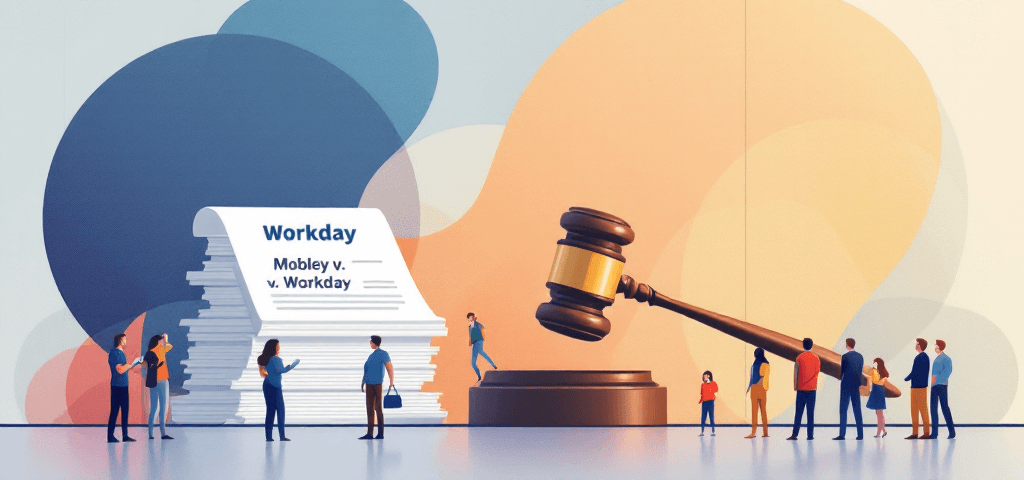
The Mobley v. Workday ruling is a significant moment for companies using AI hiring tools in their recruitment processes. Derek Mobley sued Workday, Inc., claiming that the company’s AI-powered applicant screening system discriminated against him and others based on race, age, and disability. The case gained attention when a federal court allowed it to move forward, establishing that AI vendors could be held directly responsible for employment discrimination.
AI has changed how organizations find and assess candidates. You’ve probably come across these systems yourself—automated resume screening, video interview analysis, and predictive assessments that promise to make hiring easier on a large scale. These technologies offer speed and data-driven insights that traditional methods can’t compete with.
But the main message from the Mobley v. Workday ruling is clear: AI-driven recruitment tools come with significant legal risks, especially when it comes to potential discrimination claims. The court’s decision indicates that both employers and technology vendors must be accountable for discriminatory outcomes caused by automated systems, regardless of intent. This ruling fundamentally changes how you need to think about AI hiring tools and the compliance frameworks surrounding them.
To reduce these risks, it’s important to take a more responsible approach to AI in recruitment. This means ensuring sme expertise in the development and implementation of these tools. Additionally, it is crucial to have strong measures in place to prevent fraud identity issues during the hiring process.
For those navigating this complex world of AI hiring tools, resources like our detailed step-by-step guide can be extremely helpful. Furthermore, creating a candidate landing page that prioritizes user experience can greatly enhance the recruitment process, as highlighted in our candidate landing page resource.
Understanding the Mobley v. Workday Case
Derek Mobley filed a lawsuit in 2023 against Workday, alleging that the company’s AI hiring system discriminated against him and other job applicants. Workday provides cloud-based human capital management software that includes automated applicant screening tools used by numerous Fortune 500 companies to filter candidates.
The plaintiff claimed that Workday’s AI-powered screening system violated federal civil rights laws, including the Title VII Civil Rights Act, the Age Discrimination in Employment Act (ADEA), and the Americans with Disabilities Act (ADA). Mobley, a Black man over 40 with an anxiety disorder, applied to more than 100 positions through companies using Workday’s platform and received rejections—often within minutes of submitting his applications.
Key Discrimination Claims
The allegations centered on three key discrimination claims:
- Race discrimination: The AI system allegedly screened out Black applicants at disproportionate rates
- Age discrimination: Applicants over 40 faced systematic disadvantages in the automated screening process
- Disability discrimination: The system’s assessments allegedly penalized candidates with disabilities
These issues highlight potential flaws in the data quality of AI systems, which could lead to unfair outcomes for certain candidate demographics. Furthermore, such systems may not adequately consider important factors like language proficiency, which could further disadvantage some applicants.
Court Ruling and Implications
The U.S. District Court for the Northern District of California handled the case, with Judge Rita Lin issuing a significant ruling in January 2024. The court allowed the case to proceed as a nationwide class action for age discrimination claims while permitting individual claims for race and disability discrimination to move forward. This marked one of the first times a court recognized that an AI vendor could face direct liability under employment discrimination laws.
This case also raises questions about the overall candidate experience during the hiring process, as many individuals like Mobley face numerous rejections due to systemic biases in automated systems. Moreover, it underscores the urgent need for AI vendors to prioritize time savings along with fairness and inclusivity in their hiring algorithms, ensuring that all candidates are given a fair chance regardless of their race, age or disability status.
Legal Findings and Implications for Employers

The court’s decision in Mobley v. Workday established several precedent-setting legal principles that reshape how employers and software vendors approach AI-driven recruitment. The ruling recognized direct liability for Workday under federal anti-discrimination laws, marking a significant departure from traditional interpretations that typically shielded technology vendors from such claims.
You need to understand what this means for your organization. The court determined that Workday wasn’t merely providing neutral software—it was actively participating in the hiring process through its AI algorithms. This distinction matters because it expands the scope of who can be held accountable when discriminatory outcomes occur.
The court dismissed the employment agency claims against Workday, which would have classified the company as a traditional staffing intermediary. This dismissal might seem like a win for the vendor, but the acceptance of agent theory claims proved far more consequential. Under agent theory, Workday could be held liable as an agent of the employers using its platform, creating a legal framework where technology vendors share responsibility for discriminatory outcomes their tools produce.
The most impactful aspect of the ruling came through the certification of a nationwide class action under the Age Discrimination in Employment Act (ADEA). This certification allows applicants over 40 years old who were screened by Workday’s system across the United States to join the lawsuit. The scale of this class action transforms what could have been an isolated complaint into a comprehensive examination of how AI hiring tools affect protected age groups.
For you as an employer, this ruling signals that using third-party AI screening tools doesn’t insulate you from liability—it potentially doubles your exposure by adding the vendor as a co-defendant in discrimination claims.
Disparate Impact Theory: A Key Consideration in AI Hiring
Disparate impact theory is the foundation of the Mobley v. Workday case. This legal principle doesn’t require proof that an employer intended to discriminate. Instead, it looks at whether a seemingly neutral practice has discriminatory effects on protected groups.
The court used this framework to evaluate Workday’s AI-powered screening system. You don’t need to prove that Workday intentionally designed its algorithms to exclude certain candidates. The main question is: does the system disproportionately reject applicants based on race, age, or disability status?
How Bias in Algorithms Manifests Through Outcomes
The Mobley ruling shows how bias in algorithms appears in results. The plaintiff presented evidence suggesting that Workday’s assessments—including personality tests, gamified evaluations, and behavioral questions—led to rejection rates that varied significantly across demographic groups. Older applicants reportedly faced higher rejection rates compared to younger candidates with similar qualifications.
This approach to unintentional discrimination creates significant legal risk for AI hiring tools. The system might seem neutral on the surface, using standardized questions and automated scoring. However, if the data shows that candidates over 40 are being rejected at higher rates, you’ve established a basic case of disparate impact.
The Broader Implications for AI Hiring Tools

The ruling in Mobley v. Workday has implications beyond this specific case. It signals that courts now recognize algorithmic decision-making can perpetuate discrimination patterns, even when individual decisions are not influenced by human bias.
How Workday’s AI Hiring System Works
Workday’s AI-powered recruitment platform uses various methods to assess candidates on a large scale. The system incorporates personality tests and cognitive tests into the selection process, generating scores that feed into automated decision-making algorithms. These assessments evaluate skills such as problem-solving, behavior patterns, and cultural fit.
The Evidence of Automation in Screening
The Mobley case revealed strong evidence of automation throughout the screening process. Plaintiffs received rejection emails within minutes of submitting applications—sometimes as quickly as seconds after clicking “submit.” This rapid response pattern showed that human reviewers weren’t looking at individual applications. Instead, the AI system was making quick decisions about candidate suitability based on algorithmic scoring.
Understanding the Scale of Workday’s Technology
It’s important to understand how this technology works on a large scale. Workday’s system handles thousands of applications at once, using consistent evaluation criteria for entire groups of applicants. The AI examines answers to standardized questions, compares scores against set thresholds, and automatically decides whether to accept or reject candidates.
Examples of Automation in Decision-Making
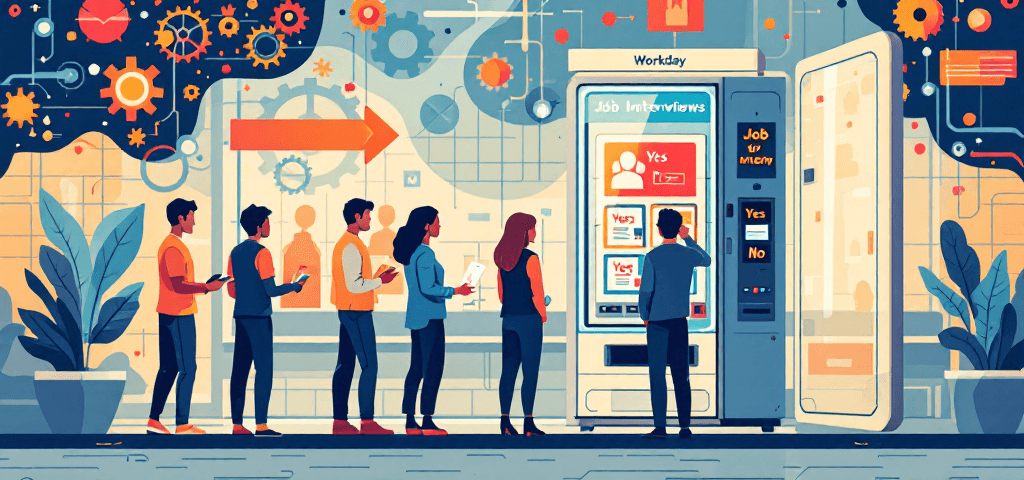
The court documents pointed out specific instances where applicants never interacted with human decision-makers. The system’s algorithms determined their fate based solely on test responses and application data. This level of automation raised important questions about accountability—when an AI system makes biased decisions without human involvement, who is responsible for the results?
However, it’s important to note that AI won’t completely change hiring, it will save time by making the recruitment process more efficient.
Mitigating Legal Risks for Employers Using AI Hiring Tools
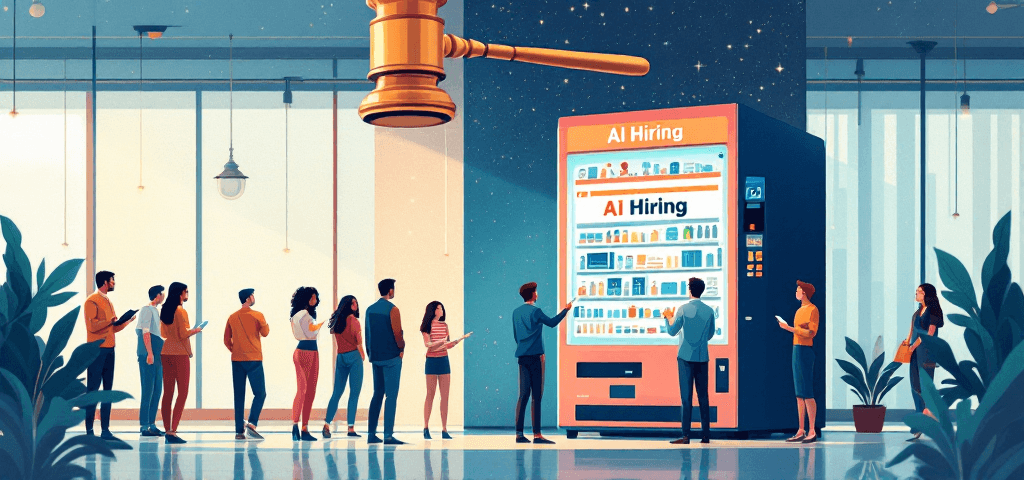
The Mobley v. Workday ruling fundamentally reshapes the landscape of legal risks and employer liability in AI-driven recruitment. You face unprecedented exposure to discrimination lawsuits when your hiring outcomes disproportionately impact protected groups, regardless of your intent.
The court’s decision establishes that AI vendor accountability extends beyond theoretical responsibility. Workday now faces direct liability under federal civil rights laws, marking a significant shift from the traditional view of technology providers as mere tool suppliers. You need to understand that vendors can be held accountable for discriminatory outcomes their systems produce, creating a new category of defendants in employment discrimination cases.
As you navigate these legal risks, it’s crucial to recognize that federal civil rights compliance demands your immediate attention if you’re using third-party AI hiring technologies. The ruling demonstrates three critical liability pathways:
- Direct employer liability – You remain responsible for discriminatory outcomes even when using external AI tools
- Vendor liability – Technology providers like Workday can face lawsuits for their systems’ discriminatory effects
- Joint liability – Both you and your AI vendor may be named as co-defendants in discrimination claims
The nationwide class action status granted under the Age Discrimination in Employment Act creates substantial financial exposure. You’re looking at potential damages multiplied across thousands of applicants who experienced similar discriminatory screening processes.
Your legal risk intensifies when you cannot explain or justify the specific criteria your AI system uses to evaluate candidates. The court scrutinized Workday’s “black box” assessment methodology, finding that opaque algorithmic decision-making provides insufficient protection against discrimination claims. This highlights the importance of maintaining transparency in how your AI tools evaluate applicants and being prepared to defend those criteria in court.
Moreover, using AI hiring tools without proper design can lead to significant issues. As discussed in this article on entropy in AI and organizations, everything can fall apart without a well-thought-out design strategy.
In addition, if your organization is involved in global hiring, be aware of the potential language testing mistakes that AI can help fix, but also be mindful of the legal implications that come with it.
While AI hiring tools can streamline your recruitment process, they also come with significant legal risks that must be carefully managed.
Best Practices for Fair and Compliant Use of AI in Hiring
The Mobley v. Workday ruling makes it clear: you need a proactive strategy to protect your organization from discrimination claims when using AI hiring tools. Implementing robust safeguards isn’t just about legal compliance—it’s about building fair, defensible recruitment processes.
1. Conduct Regular Bias Audits
Bias audits should become a regular part of your hiring technology maintenance. You need to test your AI systems quarterly or semi-annually to identify patterns that might disadvantage protected groups. These audits examine whether your tools produce disparate impact across race, age, disability status, and other protected characteristics. Document every audit, including the methodology used, findings uncovered, and corrective actions taken.
2. Ensure Human Oversight

Human oversight remains non-negotiable in AI-assisted hiring. Your recruiters and hiring managers must review AI recommendations before making final decisions. The technology can surface candidates and provide insights, but humans need to apply judgment, consider context, and ensure fairness. You can’t delegate the entire decision-making process to algorithms and expect to avoid liability.
One way to enhance human oversight is by utilizing decision scorecards which can provide structured insights into the AI’s recommendations. This ensures that while AI assists in the hiring process, the final decision still rests with a human who can take into account nuances that an algorithm might miss.
3. Maintain Thorough Documentation
Documentation protects you when questions arise about your hiring practices. Record the specific criteria your AI tools use to evaluate candidates, the weights assigned to different factors, and the business justifications for each element. When you reject a candidate, document the legitimate, non-discriminatory reasons behind that decision.
4. Establish Governance Programs
Governance programs create accountability around AI use. Establish clear policies defining who can deploy AI hiring tools, what approval processes are required, and how you’ll monitor ongoing performance. Assign specific individuals responsibility for disparate impact monitoring and create escalation procedures when potential bias emerges. Your governance framework should include regular training for HR teams on recognizing and addressing algorithmic discrimination.
Incorporating AI interviews into your recruitment process can also be beneficial. These interviews can help standardize the evaluation process by providing consistent questions and scoring metrics across all candidates, further reducing potential biases in hiring decisions.
SageScreen’s Approach to Addressing Challenges in AI Hiring Tools
SageScreen solutions tackle the legal and ethical challenges highlighted by the Mobley v. Workday ruling through a fundamentally different approach to bias mitigation technology. Our screening platform is built from the ground up with compliance in mind, not as an afterthought.
The platform implements multi-layered bias detection at every stage of the candidate evaluation process. This allows you to trace how each assessment component contributes to hiring decisions, providing the transparency that courts increasingly demand. Such visibility enables you to identify and correct potential disparate impacts before they affect protected groups.
Compliant hiring practices are embedded into the system architecture through several innovative features:
- Real-time monitoring of demographic patterns in screening outcomes
- Configurable human review checkpoints that prevent fully automated rejections
- Detailed audit trails documenting the rationale behind each screening decision
- Regular validation studies measuring adverse impact across protected characteristics
SageScreen’s technology maintains the efficiency benefits of AI-driven screening while addressing the accountability gaps that created liability in the Workday case. You retain control over your hiring criteria while the system continuously evaluates whether those criteria produce legally defensible outcomes.
The platform’s design reflects lessons from discrimination litigation, incorporating safeguards that help you demonstrate good faith efforts to prevent bias. You’re not just adopting a tool—you’re implementing a framework that aligns with evolving legal standards around algorithmic decision-making.
For more insights on how to effectively navigate these challenges, consider exploring our resources on how to mitigate bias, which provide valuable guidance on this crucial aspect of AI hiring tools. Additionally, our features page offers a comprehensive overview of our platform’s capabilities, including hybrid processes that enhance screening efficiency and effectiveness.
If you’re interested in a deeper understanding of our platform’s functionalities, we recommend checking out our detailed walkthrough, which showcases how our technology works in practice.
Finally, as we look towards the future of recruitment agencies, our article on the transformation expected by 2025 offers an insightful perspective on how lean screening expertise will play a pivotal role in this evolution.
The Future of AI Hiring Tools After the Mobley Ruling
The Mobley v. Workday decision sends a clear message about industry accountability in the evolving legal standards surrounding AI recruitment technology. You can expect increased scrutiny from both regulatory bodies and plaintiff attorneys who now have a roadmap for challenging discriminatory AI systems.
Shifting Regulatory Landscape
The regulatory landscape is shifting rapidly:
- Federal agencies like the EEOC have already issued guidance on AI hiring tools, and this ruling strengthens their enforcement position.
- State-level regulations are emerging too—New York City’s Local Law 144 requires bias audits for automated employment decision tools, and other jurisdictions are following suit.
Higher Stakes for AI Hiring Vendors
For vendors developing AI hiring platforms, the stakes have risen dramatically:
- You’re no longer shielded by the employment agency exemption.
- Direct liability means your algorithms, training data, and assessment methodologies will face legal examination.
- The responsible AI development practices you implement today determine your litigation exposure tomorrow.
Parallel Pressures on Employers Using AI Tools
Employers using third-party AI tools face parallel pressures:
- You can’t simply outsource hiring decisions and assume legal immunity.
- The agent theory claims that survived dismissal in Mobley establish that you share responsibility for discriminatory outcomes produced by your vendors’ systems.
Increasing Class Action Lawsuits
The litigation trends point toward more class action lawsuits targeting both AI vendors and their employer clients:
- Disparate impact claims don’t require proof of intentional discrimination—statistical evidence of disproportionate outcomes against protected groups is sufficient.
A Safer Future for AI Hiring Tools
As we look to the future, it becomes evident that the evolution of AI hiring tools will not just be about making them smarter but rather making them safer and more compliant with emerging legal standards.
Explore How We Solve These Issues
The Mobley v. Workday ruling makes one thing clear: you can’t afford to use AI hiring tools that expose you to discrimination lawsuits. Your recruitment process needs to be both effective and defensible.
SageScreen offers a bias-free hiring solution designed with legal compliance at its core. Our platform helps you improve recruitment fairness through:
- Transparent screening processes that you can explain and defend
- Regular bias audits built into our system architecture
- Human-in-the-loop workflows that keep decision-making accountable
- Comprehensive documentation of every selection criterion
We understand the importance of interview integrity and have developed our platform with this in mind. Moreover, our dynamic assessments ensure that each candidate is evaluated fairly and comprehensively.
You need a partner who understands what The Mobley v. Workday Ruling means for AI hiring tools—and we’ve built our entire platform around these realities. With SageScreen, you’re not just getting a service; you’re gaining a partner committed to making your hiring process more efficient and legally compliant.
Ready to protect your organization while finding the best talent? Visit SageScreen to explore our plans and see how we can transform your hiring process. The SageScreen signup takes minutes, but the protection it provides lasts for years.