

When you enter a room, you’re instantly flooded with signals. A raised eyebrow here, a slight change in pitch there—these nonverbal cues influence how we navigate social interactions every single day. Most people heavily rely on facial expressions and voice tone to decipher what others really mean, often placing more trust in these signals than the actual words being spoken.
You’ve probably heard it countless times: “It’s not what you say, it’s how you say it.” This belief is deeply ingrained in our understanding of human communication. Research suggests that nonverbal elements can make up a significant part of how we interpret messages, leading many to assume that reading faces and voices is universal and essential for meaningful connection.
But here’s what you need to know: not everyone processes communication differences in the same way. For individuals on the autism spectrum, analyzing facial expressions or voice tone isn’t just challenging—it can be an unreliable or even misleading way to understand what someone means.
The Limitations of Nonverbal Cues
Moreover, relying on these nonverbal cues can sometimes result in misunderstandings or misinterpretations. For example, when evaluating a candidate’s suitability for a job, one might place too much emphasis on their demeanor during an interview instead of assessing their actual skills or qualifications. This is where decision scorecards come into play, offering a more objective measure of a candidate’s potential based on their expertise rather than their nonverbal signals.
This article explores why some people don’t analyze these nonverbal cues, challenging the assumption that they’re necessary for effective communication. You’ll discover how different neurological wiring creates entirely valid alternative ways of connecting with others, such as relying on SME expertise or other qualitative measures.
The Fallibility of Nonverbal Indicators
Furthermore, it’s important to acknowledge that while facial expressions and voice tones can offer insight into someone’s feelings or intentions, they are not infallible indicators. In certain situations, such as in fraud identity cases involving deception, these cues can be manipulated. As we explore this topic further, it’s crucial to understand the significance of recognizing these differences for fostering truly inclusive interactions.
The Role of Nonverbal Cues in Communication
Nonverbal cues are an important part of human interaction that go beyond just spoken words. When you have a conversation, your brain processes multiple sources of information at the same time: the speaker’s facial expressions, their vocal tone and rhythm, their body language, and how they time their responses. These social signals work together to create a complete message.
How Nonverbal Cues Enhance Communication
Research suggests that emotional expression through facial movements and voice modulation can add depth to verbal communication. For example:
- A raised eyebrow might indicate skepticism
- A softer tone could signal empathy
You’ve probably experienced situations where someone’s facial expression contradicted their words, leading to confusion about their true meaning. This interaction between verbal and nonverbal elements shapes how most people interpret social exchanges.
The Importance of Nonverbal Communication

The traditional communication model places significant importance on these unspoken elements. Studies have claimed that anywhere from 55% to 93% of communication is nonverbal—though these figures are still debated among scientists. What matters is the widely accepted belief that you need to understand facial expressions and voice tone in order to accurately comprehend others.
However, the reality is more complex than this simplified model suggests. Relying solely on nonverbal cues has several critical limitations:
- Cultural differences can greatly change the meaning of specific gestures and expressions
- Individual variations in expressiveness can create inconsistent signals
- Context-dependent interpretations can lead to misunderstandings
- Physical conditions or disabilities may affect someone’s ability to display typical expressions
- Neurodevelopmental differences can alter how people naturally express themselves
The Pitfalls of Misinterpreting Nonverbal Cues
You might assume a flat vocal tone indicates disinterest, when the speaker is actually deeply engaged but processes information differently. A lack of eye contact could reflect cultural norms, anxiety, or neurological differences rather than dishonesty or disrespect. These assumptions create barriers when you interact with diverse populations who don’t share the same nonverbal communication patterns you’ve learned to expect.
In such scenarios, leveraging technology like AI-driven language testing can provide valuable insights into understanding these nuances better. This approach not only helps overcome language barriers but also offers a step-by-step guide on how to effectively navigate different cultural communication styles.
A Holistic Approach to Communication
Moreover, it’s essential to remember that while nonverbal cues are significant, they should be considered alongside other factors such as cultural context and individual differences in expressiveness. This comprehensive approach can lead to more meaningful interactions and reduce misunderstandings in our increasingly globalized world.
Understanding Neurodiverse Communication Styles
Neurodiversity is a new way of understanding human brain differences. It recognizes that conditions like autism, ADHD, dyslexia, and others are natural variations of the brain, not problems to be fixed. This perspective influences how we communicate, challenging the idea that there’s only one “right” way to share and understand information.
How Autism Affects Communication

When you talk to someone with autism, you’re interacting with a brain that works differently. Autistic people process sensory information, social cues, and their surroundings in unique ways. This doesn’t mean they can’t understand or communicate—it’s just that their perception of social interactions may differ from yours.
Strengths in Autistic Communication
Autistic individuals often have specific strengths when it comes to communication:
- Pattern recognition: They may excel at identifying patterns and making connections that others might miss.
- Logical analysis: Autistic people often approach problems and discussions with a logical mindset, focusing on facts and reasoning.
- Direct verbal communication: Many autistic individuals prefer straightforward conversations without ambiguity or implied meanings.
Challenges in Nonverbal Communication
While verbal communication may come naturally to some autistic individuals, nonverbal cues can pose challenges:
- Facial expression processing: Understanding facial expressions requires quick analysis of multiple small movements (like eyebrow raises or lip curls). For many autistic people, this can be overwhelming.
- Voice tone interpretation: Pitch changes, rhythm variations, and volume shifts in speech are often processed automatically by neurotypical individuals. However, autistic communicators may need to consciously focus on these aspects to fully grasp the intended meaning.
Eye Contact Differences Among Autistic Individuals
You’ll notice that some autistic individuals maintain steady eye contact while others avoid it completely. Both behaviors stem from the same underlying reality: managing sensory and cognitive demands during social interactions in ways that allow for effective communication.
In professional settings where interview integrity is crucial or data quality is paramount such as during hiring processes or performance evaluations, it’s essential to consider these neurodiverse communication styles. Utilizing tools like SageScreen can assist in creating more inclusive environments by providing insights into candidates’ language proficiency and accommodating their unique communication needs.
Challenges Faced by Autistic Individuals in Nonverbal Analysis
The cognitive load required to simultaneously process facial expressions and voice tone while maintaining conversation flow creates significant barriers for many autistic individuals. You might spend so much mental energy trying to decode a smile or interpret vocal inflections that you lose track of the actual words being spoken. This isn’t a matter of intelligence or capability—it’s about how the brain allocates processing resources.
The Double Burden of Social Interaction

Autistic people often face a choice: focus on understanding the literal content of communication or attempt to analyze nonverbal signals. Trying to do both simultaneously can lead to:
- Exhaustion from sustained mental effort
- Missing critical information in the verbal message
- Delayed responses while processing multiple input streams
- Increased anxiety about “getting it wrong”
The assumptions neurotypical individuals make compound these difficulties. When you don’t make expected eye contact or respond to subtle facial cues, others may incorrectly assume you’re disinterested, rude, or not paying attention. These misunderstandings create a cycle of social stress that makes future interactions even more challenging.
Common Misconceptions That Create Barriers

Neurotypical people frequently believe that everyone processes social signals the same way they do. This leads to problematic assumptions:
- “If they’re not looking at my face, they’re not listening”
- “They didn’t react to my tone, so they must not care”
- “Their flat expression means they’re bored or upset”
These interpretations ignore the reality that autistic individuals may be deeply engaged with the conversation while showing different external signals. The expectation that everyone should naturally read and respond to facial expressions or voice tone creates unnecessary pressure and misunderstandings on both sides of the interaction.
The stress of navigating these expectations can be overwhelming. You’re not just communicating—you’re constantly monitoring whether your responses match neurotypical expectations, creating an additional layer of cognitive demand that interferes with genuine connection.
In professional settings, such as during AI interviewing, these challenges can be exacerbated. The reliance on nonverbal cues in interviews often overlooks the unique communication styles of autistic individuals, leading to candidate experience issues.
Moreover, as we move towards an era where AI technology plays an increasingly significant role in recruitment and assessment processes, it is crucial to ensure that these systems are designed with inclusivity in mind. This involves implementing dynamic assessments that accommodate diverse communication styles and reduce cognitive load during evaluations.
Furthermore, the potential for time savings through AI in recruitment should not come at the cost of fairness and accessibility for all candidates, including those who are autistic. It’s important to understand that these challenges aren’t just personal struggles; they reflect broader societal misconceptions about autism and communication. As highlighted in research from [this article](https://pmc.ncbi.nlm.nih.gov/articles/PMC122712
Moving Towards Inclusive Communication Strategies
Creating space for inclusive communication requires a fundamental shift in how we approach interactions with neurodiverse individuals. It’s essential to recognize that your communication style isn’t universal—what feels natural to you may create barriers for others.
Empathy starts with questioning your assumptions
When someone doesn’t make eye contact or uses a monotone voice, you’re interpreting their behavior through your neurotypical lens. That interpretation is often wrong. The autistic person isn’t being rude, disinterested, or dishonest—they’re simply communicating differently. This misinterpretation often stems from the double empathy problem, where both parties struggle to understand each other’s communication styles.
Neurotypical awareness means accepting that you might be the one who needs to adapt
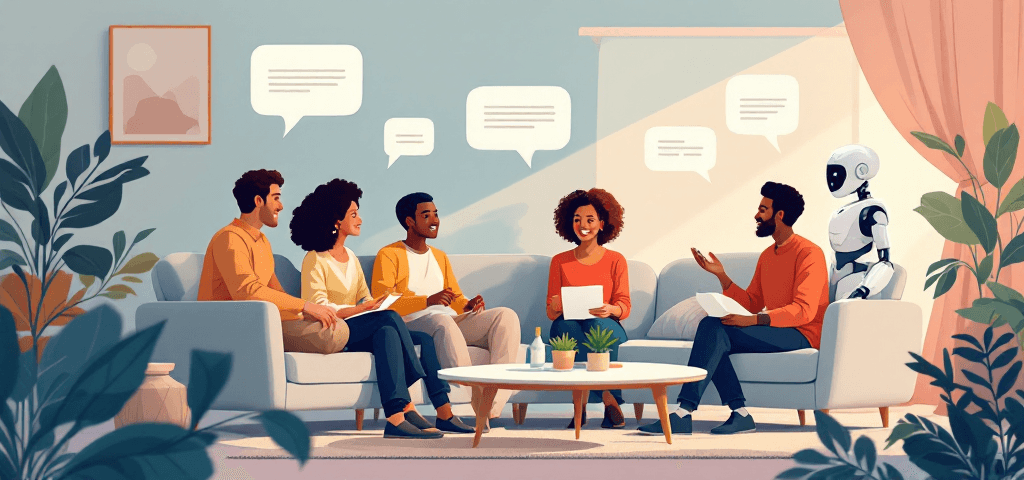
This isn’t about lowering standards or making excuses. It’s about recognizing that effective communication happens when both parties understand each other, regardless of the methods used. You can start by:
- Asking direct questions instead of expecting someone to “read between the lines”
- Accepting verbal responses at face value rather than searching for hidden meanings in tone
- Stating your intentions explicitly rather than relying on facial cues to convey them
- Checking your understanding by paraphrasing what you heard
The responsibility for successful communication doesn’t rest solely on autistic individuals to decode your nonverbal signals. You share equal responsibility in creating an environment where clear, direct verbal communication takes priority over ambiguous nonverbal cues.
Incorporating AI interviews into the recruitment process can also play a significant role in promoting inclusive communication strategies. These interviews can be designed to minimize stress and anxiety, allowing neurodiverse candidates to showcase their skills and abilities without the pressure of traditional interview formats.
Moreover, as we move towards 2025, it’s crucial for recruiting agencies to transform their practices by adopting lean screening expertise. This shift not only streamlines the hiring process but also reduces potential legal risks associated with discriminatory hiring practices.
However, it’s essential to remember that while AI won’t revolutionize hiring, it will certainly save time and resources when implemented correctly, allowing hiring managers to focus more on creating an inclusive environment that respects and values diverse communication styles.
Ultimately, moving beyond labels and embracing mutual understanding can significantly enhance our approach towards neuroinclusive communication.
Practical Solutions for Bridging Communication Gaps
Implementing specific communication strategies can create clearer pathways for understanding between neurotypical and neurodiverse individuals. These approaches don’t require mastering the art of reading facial expressions or interpreting vocal nuances.
One of the most effective tools at your disposal is explicit verbal clarifications. Instead of assuming someone understands your emotional state through your tone or expression, you can simply state it: “I’m feeling frustrated right now, but I want to work through this with you” or “I’m excited about this idea.” This direct approach removes ambiguity and provides concrete information that everyone can process equally.
Structured Communication Frameworks
You’ll find success with these practical approaches:
- Ask direct questions rather than expecting others to infer your needs from context
- Confirm understanding by requesting specific feedback: “Can you tell me what you heard me say?”
- Use written communication when discussing complex topics, allowing time for processing
- Establish clear expectations at the beginning of conversations about communication preferences
- Create visual aids like flowcharts or bullet-pointed summaries for important discussions
Technology Aids for Enhanced Understanding
Modern technology aids offer powerful support for accurate communication. Text-based platforms like email or messaging apps naturally eliminate the pressure to interpret nonverbal cues. You can use these tools to:
- Draft and review messages before sending, ensuring clarity
- Reference previous conversations without relying on memory of tone or expression
- Share screen recordings with annotations to explain complex concepts
- Utilize speech-to-text applications that focus purely on verbal content
Video conferencing tools with live transcription features provide real-time text alternatives, allowing you to focus on the actual words being spoken. Some inclusivity tools even offer AI-powered summaries of meetings, capturing key points without requiring participants to decode social signals during the conversation itself.
However, it’s crucial to remember that without a proper design in place, such as those suggested in the article on Entropy AI and organizations, communication can still fall apart. Thus, integrating these strategies while keeping in mind the importance of structured design can significantly enhance communication efficacy.
Additionally, when it comes to recruitment processes, leveraging recruiter tools that facilitate better understanding and communication can lead to more successful outcomes.
Building Awareness and Training for Neurotypical Individuals
Training programs designed specifically for neurotypical individuals can transform workplace dynamics and social environments. You need structured education that goes beyond surface-level diversity initiatives. Organizations implementing comprehensive neurodiversity training report significant improvements in team collaboration and reduced communication breakdowns.
Awareness campaigns serve as powerful catalysts for change in how we approach communication differences. When you participate in social education initiatives focused on Why We Don’t Analyze Facial Expressions or Voice Tone, you gain practical insights into alternative communication methods. These campaigns challenge the assumption that everyone processes social information identically.
Effective social education programs include:
- Interactive workshops demonstrating different communication processing styles
- Role-playing exercises that simulate neurodiverse perspectives
- Video modules showing real-world communication scenarios
- Peer-led discussions about personal experiences with communication differences
You’ll find that the most successful training programs incorporate input from autistic individuals themselves. Their firsthand experiences provide authentic learning opportunities that textbook definitions simply cannot match. Companies like Microsoft and SAP have invested heavily in neurodiversity training, creating environments where communication differences are understood rather than pathologized.
The shift requires you to actively unlearn ingrained assumptions about “correct” communication. When neurotypical individuals receive proper training, they develop the flexibility to adapt their communication style rather than expecting others to conform to neurotypical norms.
Conclusion
Why We Don’t Analyze Facial Expressions or Voice Tone is simple: these cues alone don’t tell the complete story. You’ve seen throughout this article how relying exclusively on nonverbal signals creates barriers rather than bridges in communication.
The path to effective communication requires you to:
- Listen to the actual words people use instead of assuming meaning from expressions
- Ask for clarification when you’re uncertain about someone’s intent
- Respect differences in how people naturally communicate
- Value directness as a legitimate communication style
When you shift your focus from reading faces to understanding messages, you reduce misunderstandings significantly. Autistic individuals aren’t failing at communication—they’re communicating differently. The responsibility for successful interaction doesn’t rest on one group adapting to another’s style.
You can create more inclusive spaces by recognizing that facial expressions and voice tone are optional layers, not essential foundations. The words themselves carry the message. Everything else is supplementary. This perspective doesn’t diminish nonverbal communication—it simply puts verbal clarity where it belongs: at the center of meaningful exchange.