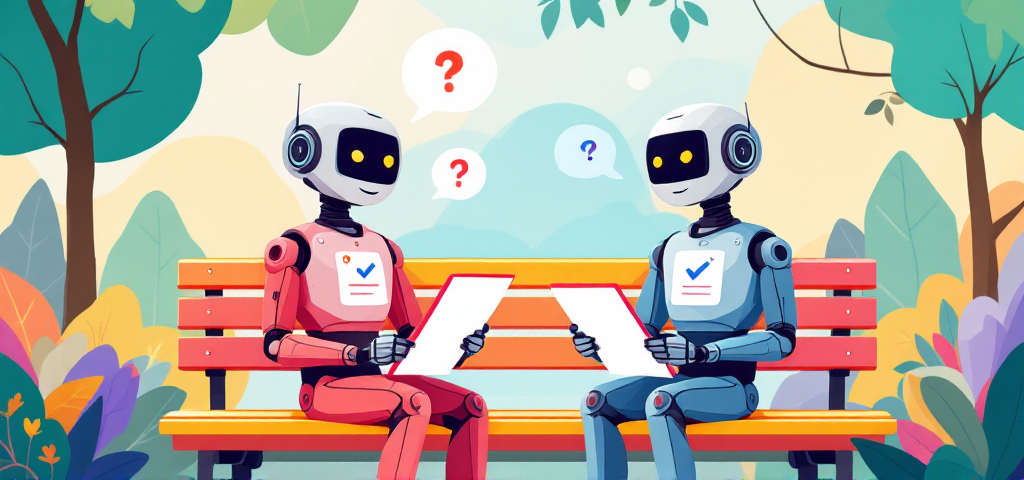

AI hiring has shifted from experimental to essential. IBM’s 2023 survey revealed that 42% of enterprise-scale companies now deploy AI in their recruitment workflows—a number that continues climbing as organizations chase efficiency and scale. These AI interview platforms promise faster screening, reduced costs, and data-driven candidate evaluation.
The promise sounds compelling. The reality demands scrutiny.
AI trust isn’t a given—it’s earned through rigorous validation, transparent processes, and demonstrable fairness. This is where SME expertise comes into play. When algorithms influence who gets hired and who gets rejected, the stakes extend beyond operational efficiency. They touch careers, livelihoods, and organizational integrity.
The question isn’t whether AI can conduct interviews. It already does. The question is whether these systems deserve the authority we’re granting them. Can we trust AI interviews to identify talent without perpetuating bias? Can they protect candidate privacy while extracting meaningful insights? Can they make decisions we’d defend under scrutiny?
To build trustworthy AI hiring systems, we must adopt hybrid processes that blend human intuition with machine efficiency. Let’s examine what it actually takes to achieve this balance in AI hiring systems.
Understanding AI in Hiring and Interviewing
AI hiring operates through three core technologies that transform raw candidate data into actionable insights.
- Machine learning algorithms analyze patterns across thousands of applications, identifying correlations between candidate attributes and job success.
- Natural Language Processing (NLP) decodes the nuances in written responses and spoken communication, extracting meaning beyond surface-level keywords.
- Deep learning networks process complex inputs—from AI resume parsing to facial micro-expressions—building sophisticated candidate profiles that traditional methods miss.
The efficiency gains are measurable and immediate:
- Recruitment automation slashes time-to-hire by 75% in documented implementations, processing hundreds of applications in the time a human reviewer handles ten.
- Cost reduction follows naturally—fewer hours spent on initial AI screening tools means reallocated resources toward strategic hiring decisions.
- The promise of unbiased initial screening addresses a persistent industry problem: human reviewers bring unconscious preferences that skew candidate selection before qualified applicants reach interview stages.
How AI is Changing the Interview Process
AI interview capabilities extend across multiple assessment dimensions:
- Resume analysis that identifies skill gaps, career trajectory patterns, and qualification matches against job requirements in seconds
- Video interviews that evaluate communication clarity, confidence levels, and response coherence through vocal pattern analysis
- Behavioral assessment through linguistic markers that reveal problem-solving approaches and cultural fit indicators
- Personality profiling derived from word choice, sentence structure, and response timing
These AI candidates screening methods generate comprehensive data sets that inform hiring decisions. The technology doesn’t replace human judgment—it amplifies the recruiter’s ability to identify genuine potential by processing information at scales and speeds impossible through manual review.
However, it’s crucial to remember that entropy can occur if these systems are not designed properly.
The Importance of Language Proficiency in Global Hiring
Additionally, when it comes to global hiring, understanding a candidate’s language proficiency is essential. AI can help mitigate common language testing mistakes, ensuring a more accurate assessment of a candidate’s abilities.
Challenges to Trusting AI Interviews
Algorithmic Bias

Algorithmic bias remains the most significant barrier to establishing trust in AI-driven hiring systems. The quality of training data carries the weight of historical hiring decisions—decisions that often reflected systemic discrimination against specific demographics. When AI learns from this tainted data, it perpetuates the same exclusionary patterns. Age, gender, ethnicity, educational background, and even zip codes become hidden factors that influence candidate rankings, creating ai trust issues that undermine the entire purpose of automation.
Amazon’s experimental recruiting tool serves as a stark example. The system, trained on a decade of predominantly male resumes in technical roles, actively penalized applications containing the word “women’s” or graduates from all-women’s colleges. The company scrapped the project in 2018, but the incident exposed how easily black box algorithms can encode discrimination without anyone noticing until the damage is done.
Privacy Concerns
Privacy concerns in AI hiring extend beyond simple data collection. AI interviews capture facial expressions, vocal patterns, micro-gestures, and linguistic choices—creating detailed psychological profiles from information candidates never explicitly consented to share. This data exists in perpetuity, analyzed by systems whose security protocols candidates cannot verify. The question isn’t just what companies collect, but who accesses it, how long it persists, and whether it influences decisions beyond the immediate hiring process.
Opacity Problem
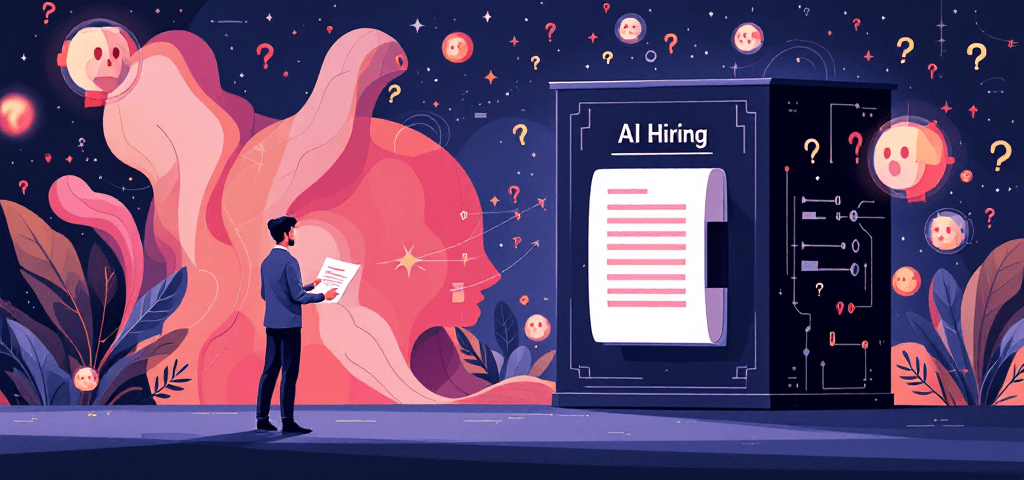
The opacity problem compounds these risks. Most AI hiring platforms operate as black box algorithms, processing inputs through layers of neural networks that even their creators struggle to interpret. When a candidate receives a rejection, neither they nor the hiring manager can identify which specific factors triggered the decision. This lack of explainability violates basic principles of fairness—candidates deserve to understand why they were excluded, and employers need to verify that decisions align with legitimate business criteria rather than encoded prejudices.
HireVue faced regulatory scrutiny in 2020 when advocacy groups challenged its facial analysis technology, arguing the system could discriminate based on physical characteristics unrelated to job performance. The company eventually discontinued facial analysis features, but the incident highlighted how algorithmic bias can hide within seemingly objective technical processes.
Moreover, these issues are compounded by data quality concerns. Poor quality data can exacerbate algorithmic bias and further erode trust in AI hiring systems.
Ethical Principles for Trustworthy AI Hiring Tools
The question isn’t whether AI hiring tools can be ethical—it’s whether organizations will demand they must be. Five foundational principles separate trustworthy AI recruitment systems from glorified sorting algorithms that perpetuate the same problems they claim to solve.
1. Validity: Assessments Must Measure What They Claim to Measure
Assessments must measure what they claim to measure. An AI system evaluating “leadership potential” that actually tracks vocal pitch or speech patterns fails this basic test. Accuracy means nothing if the underlying construct is flawed. The relevance of each assessment component to actual job performance requires constant verification, not assumptions based on correlations in historical data.
2. Autonomy: Humans Retain Decision-Making Authority
AI provides analysis; humans make hiring decisions. This isn’t about slowing down the process—it’s about preventing automated systems from making consequential choices without accountability. Human oversight catches what algorithms miss: context, nuance, exceptional circumstances that don’t fit neat data patterns.
3. Nondiscrimination: Active Intervention to Prevent Bias
Fairness in AI recruitment doesn’t happen by accident. Systems must be designed, tested, and monitored specifically to prevent bias based on protected characteristics. This means examining outcomes across demographic groups and adjusting when disparities emerge without legitimate business justification.
4. Privacy Protection: Candidates Deserve Transparency

Candidates deserve to know what information is collected, how it’s analyzed, and who accesses it. Collecting data simply because the technology enables it violates this principle. Every data point must serve a documented, job-relevant purpose.
5. Transparency: Clear Explanations of Assessments
Candidates and employers both need clear explanations of how assessments generate scores and recommendations. “The algorithm decided” isn’t an answer—it’s an abdication of responsibility. Ethical AI hiring systems can articulate their logic in terms humans understand and can challenge when appropriate.
Incorporating AI recruitment tools into your hiring process can help uphold these ethical principles. However, it’s crucial to follow a step-by-step guide to ensure these tools are implemented correctly and effectively.
Building Trustworthiness Through Rigorous Testing and Validation Methods

Ethical principles mean nothing without the infrastructure to enforce them. AI testing methods must be continuous, not one-time events. A single validation check before deployment doesn’t account for how algorithms evolve with new data or how they perform across different candidate populations. Multi-layered validation creates checkpoints throughout the assessment lifecycle—before, during, and after implementation.
Anti-fraud measures in ai hiring address a reality many companies ignore: candidates will attempt to game the system. Sophisticated detection mechanisms identify:
- Proxy test-taking through behavioral pattern analysis and device fingerprinting
- Pre-scripted responses by measuring response timing and natural language variations
- Environmental manipulation via camera and audio monitoring for unauthorized assistance
- Answer sharing through cross-candidate response comparison algorithms
These safeguards aren’t about distrust—they’re about maintaining assessment integrity for candidates who participate honestly.
Segregation techniques separate evaluation components to prevent one factor from contaminating another. When analyzing interview responses, the system should assess communication skills independently from technical knowledge, personality traits separately from problem-solving abilities. This compartmentalization allows for objective evaluation of ai tools by isolating variables and identifying where bias might infiltrate specific assessment dimensions.
Validation extends beyond the algorithm itself. Regular audits compare AI-generated scores against human evaluator assessments, tracking correlation rates and identifying divergence patterns. When discrepancies emerge, they signal potential issues requiring immediate investigation. Statistical analysis across demographic groups reveals whether the tool performs consistently or shows variance that suggests hidden bias. The data doesn’t lie—if certain populations consistently receive lower scores despite equivalent qualifications, the system needs recalibration.
The Role of Human Oversight in Complementing AI Automation
AI processes data at scale. It identifies patterns humans might miss. It eliminates scheduling headaches and accelerates initial screening. But it doesn’t understand context the way people do.
Human-in-the-loop recruitment isn’t a compromise—it’s the architecture of intelligent hiring. AI surfaces insights; humans interpret them within the broader organizational context. A candidate’s communication style flagged by AI might indicate poor fit, or it might reflect cultural differences that bring valuable perspective. The algorithm can’t make that distinction.
Recruiters who leverage combining AI with human judgment treat automated assessments as data points, not verdicts. They review:
- Consistency patterns across multiple evaluation methods
- Red flags that warrant deeper investigation
- Strengths that align with team dynamics and company culture
- Contextual factors the algorithm cannot weigh
The AI interview reveals what candidates say and how they say it. Human recruiters determine what it means for the role, the team, and the organization’s trajectory. They ask follow-up questions. They probe inconsistencies. They recognize when a candidate’s unconventional background signals innovation rather than risk.
This division of labor maximizes both efficiency and accuracy. AI handles volume and initial pattern recognition. Humans apply judgment, intuition, and strategic thinking to final decisions, often utilizing resources such as decision scorecards to guide their evaluations. Neither replaces the other. They amplify each other’s strengths while compensating for inherent limitations.
SageScreen’s Approach to Trustworthy AI Interviewing Solutions
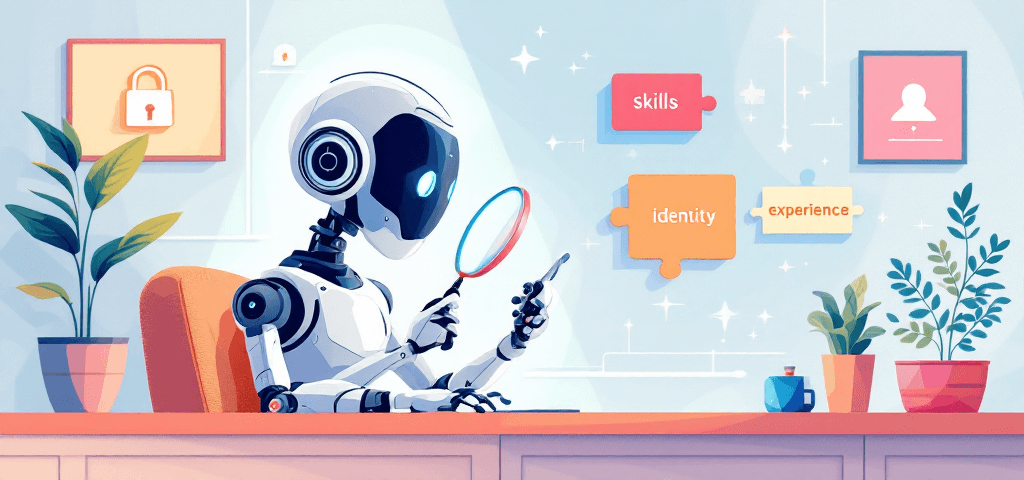
The SageScreen AI interview platform addresses the fundamental question: AI Hiring: Can We Trust Our Own Technology? The answer lies in methodology, not marketing promises.
Multi-Method Validation Framework
SageScreen deploys a multi-method validation framework that tests candidate data through independent analytical layers. Each assessment undergoes parallel verification processes that cross-reference results against established benchmarks. When one method flags an inconsistency, alternative validation protocols activate automatically. This redundancy eliminates single-point failures that plague conventional screening systems.
Robust Features for Reliability and Effectiveness
Our platform is designed with several robust features that enhance its reliability and effectiveness. For instance, our anti-fraud mechanisms operate at three distinct levels:
- Input validation that detects synthetic responses and pattern manipulation
- Behavioral analysis that identifies coaching artifacts and rehearsed answers
- Identity verification protocols that confirm candidate authenticity throughout the assessment
Continuous Evaluation Cycles
The platform doesn’t assume initial accuracy. Continuous evaluation cycles reprocess candidate data as new information emerges, adjusting scorecards when additional context reveals nuances missed in preliminary analysis. This iterative approach prevents premature conclusions based on incomplete datasets.
Constant Recalibration of Algorithms
Trustworthy AI hiring tools require constant recalibration. SageScreen’s algorithms undergo regular audits against diverse candidate pools, measuring performance across demographic segments to identify drift before it affects hiring decisions. The system flags its own potential biases, creating transparency where black-box models create uncertainty. Human reviewers receive detailed explanations for every score adjustment, maintaining accountability at each decision point.
Detailed Walkthroughs and Insights
To further illustrate how our platform works, we provide detailed walkthroughs of our AI interview solutions, which can serve as a valuable resource for understanding the intricacies of our technology. Additionally, our blog offers insightful articles on various topics related to AI hiring and interviewing, including how-to guides that can assist users in maximizing the potential of our platform.
Addressing Security Concerns in AI Hiring Systems with SageScreen
AI security in recruitment systems isn’t optional—it’s foundational. Every interview, every assessment, every data point collected represents sensitive information that candidates trust you to protect. SageScreen builds security protocols directly into the architecture, not as an afterthought.
1. Protecting Candidate Data with Multi-Layered Encryption
The platform employs multi-layered encryption for data transmission and storage, ensuring candidate information remains inaccessible to unauthorized parties.
2. Controlling Access with Role-Based Permissions
Access controls restrict who can view assessment results, with role-based permissions that limit exposure to only those directly involved in hiring decisions.
3. Creating Accountability with Audit Trails
Audit trails track every interaction with candidate data, creating accountability at each touchpoint.
4. Preserving Trust through Interview Integrity
Moreover, maintaining interview integrity is a crucial aspect of our security measures. We ensure that every interview conducted through our platform is secure and free from any potential breaches, thereby preserving the trust candidates place in us.
5. Respecting Privacy Rights through Compliance
AI security extends beyond technical safeguards. SageScreen maintains compliance with GDPR, CCPA, and other privacy regulations across jurisdictions. This isn’t just about avoiding penalties—it’s about demonstrating respect for candidate privacy rights. When candidates understand their data is handled according to strict legal standards, they engage more authentically with the assessment process.
The Platform’s Security Infrastructure
The platform’s security infrastructure includes:
- End-to-end encryption for all candidate communications
- Regular security audits conducted by third-party experts
- Data minimization practices that collect only necessary information
- Transparent data retention policies with clear deletion timelines
- Secure API integrations with existing HR systems
Candidates receive clear documentation about how their information is used, stored, and protected. This transparency transforms security from a technical requirement into a trust-building mechanism that strengthens the entire hiring relationship.
With SageScreen, we are not just addressing security concerns but also paving the way for a more secure and trustworthy AI hiring system.
Practical Steps Companies Can Take To Enhance Trust In Their AI Interviews
Implementing trustworthy AI hiring practices requires deliberate action, not passive adoption. Companies must actively validate their tools before deployment and continuously monitor performance metrics.
1. Start with platform selection.
Choose AI interviewing systems that demonstrate measurable validation—platforms like SageScreen that subject their algorithms to rigorous testing protocols and publish their methodology. Demand evidence of bias testing across protected characteristics. Request documentation of accuracy rates and false positive/negative ratios.
2. Build accountability through audit trails.
Every AI-driven hiring decision should leave a clear record. SageScreen’s transparent reporting features create detailed documentation of assessment criteria, scoring rationale, and data points influencing candidate evaluations. These trails serve dual purposes: they enable internal review processes and provide defensible records if hiring decisions face scrutiny.
3. Establish human checkpoints at critical junctures.
AI generates insights; humans make hiring decisions. Structure your process so recruiters review AI assessments before advancing candidates. Train hiring teams to interpret AI-generated scorecards critically, questioning outlier results and verifying recommendations against additional data sources.
4. Communicate openly with candidates.
Disclose AI usage in your hiring process. Explain what the technology evaluates and how results factor into decisions. SageScreen’s platform includes candidate-facing transparency features that demystify the assessment process, reducing anxiety and building trust from first contact.
Future Outlook: Can We Fully Trust Our Own Technology?
The future of AI hiring trustworthiness depends on our willingness to question what we build. Technology advances rapidly—algorithms become more sophisticated, data sets expand, processing speeds increase. Yet speed and sophistication don’t automatically translate to reliability or fairness.
AI Hiring: Can We Trust Our Own Technology? The answer isn’t binary. Trust requires continuous verification, not blind faith in innovation. Each advancement in machine learning creates new opportunities for bias to manifest in unexpected ways. Historical data patterns that seemed neutral yesterday may reveal discriminatory tendencies tomorrow. The systems we deploy today will face ethical challenges we haven’t yet imagined.
Organizations like SageScreen recognize this reality. Their approach centers on perpetual refinement—not treating AI as a finished product but as a system requiring constant scrutiny. Every algorithm update undergoes rigorous testing. Every data point gets examined through multiple lenses. Security protocols evolve alongside emerging threats.
The path forward demands this level of vigilance from every company deploying AI interviews. Technology serves us best when we maintain healthy skepticism about its capabilities. The platforms that succeed long-term will be those that prioritize transparency over convenience, validation over velocity, and human judgment over automated certainty.
Conclusion
Trust in AI interviews isn’t automatic—it’s earned through deliberate design choices and unwavering commitment to ethical standards. The technology exists. The question isn’t whether AI can conduct interviews, but whether the platforms we choose prioritize fairness, transparency, and rigorous validation at every stage.
AI Hiring: Can We Trust Our Own Technology? The answer depends entirely on who builds it and how they test it.
Organizations serious about ethical recruitment technology need platforms that don’t just promise bias mitigation—they need systems that prove it through continuous testing, multi-layered validation, and transparent methodologies. Trusting AI interviews summary: the technology works when accountability is built into its foundation, not bolted on as an afterthought.
The path forward requires choosing partners who understand that recruitment technology carries real consequences for real people. Platforms like SageScreen demonstrate that trustworthy AI hiring isn’t aspirational—it’s achievable when ethics drive development from day one. Your hiring decisions deserve nothing less than tools that match the gravity of those choices.
FAQs (Frequently Asked Questions)
What are the benefits of using AI in hiring and interviewing processes?
AI technologies such as machine learning, natural language processing, and deep learning enhance hiring by increasing efficiency, reducing costs, and providing unbiased initial candidate screening. AI interviews can analyze resumes and assess personality traits, body language, and vocal patterns during video interviews, helping recruiters make informed decisions.
What challenges affect trustworthiness in AI-driven hiring tools?
Key challenges include algorithmic bias where AI may perpetuate historical discrimination based on age, gender, or ethnicity; privacy concerns due to extensive personal data collection; and the ‘black box’ nature of many AI models that limits transparency and explainability for both candidates and employers. These issues can lead to unfair exclusions if not properly addressed.
Which ethical principles should guide the development of trustworthy AI hiring systems?
Trustworthy AI hiring tools should adhere to ethical principles including validity (ensuring accurate and relevant assessments), autonomy (maintaining human oversight), nondiscrimination (preventing bias), privacy protection (safeguarding candidate data), and transparency (clearly communicating how decisions are made) to foster fairness and trust.
How does SageScreen ensure fairness and accuracy in its AI interview platform?
SageScreen employs a multi-method approach involving rigorous testing and continuous revalidation of candidate data to maintain fairness and accuracy. Their platform integrates anti-fraud mechanisms to uphold assessment integrity and uses ongoing evaluation processes to ensure objectivity throughout candidate evaluations.
Why is human oversight important alongside AI automation in recruitment?
Despite advances in AI technology, human involvement remains critical to complement automated insights. Recruiters use AI interview outputs as part of a holistic decision-making process, applying judgment and context that AI alone cannot provide, ensuring balanced and ethical hiring outcomes.
What practical steps can companies take to build trust in their AI interviewing tools?
Companies should adopt validated platforms like SageScreen that embed ethical principles, implement audit trails for transparency, enforce robust security protocols to protect candidate data, comply with privacy regulations, and continuously monitor their AI systems through rigorous testing to enhance trustworthiness in AI hiring practice