

Applicant Tracking Systems (ATS) are software platforms designed to centralize, automate, and optimize every stage of the recruitment process—from job posting to candidate onboarding. For medium businesses operating with lean teams and tight budgets, an ATS transforms hiring from a resource-draining bottleneck into a streamlined operation.
The reality is stark: medium businesses can’t afford to lose top talent to sluggish hiring processes. Every day a position remains unfilled costs money, productivity, and competitive advantage. Traditional recruitment methods—spreadsheets, email chains, manual resume reviews—create delays that drive candidates toward faster-moving competitors.
ATS integrations solve this problem by connecting your recruitment software directly to the tools you already use:
- Calendar applications for instant interview scheduling
- HRIS platforms for seamless data transfer
- Skills testing tools for objective candidate evaluation
- Communication systems for real-time team collaboration
- Background check services for automated verification
These connections eliminate duplicate data entry, reduce human error, and accelerate decision-making. When your ATS communicates with your existing business systems, hiring becomes a coordinated workflow rather than a series of disconnected tasks.
This article examines four leading ATS solutions for medium business that deliver measurable improvements in hiring speed and operational efficiency through strategic integrations. To further enhance these solutions, it’s crucial to incorporate elements like decision scorecards which provide objective criteria for evaluating candidates. Additionally, leveraging SME expertise can significantly improve the quality of hires by ensuring that the recruitment process is guided by industry knowledge.
Moreover, integrating fraud identity checks into the ATS can help mitigate risks associated with fraudulent applications. Lastly, understanding how to effectively utilize these systems can maximize their potential and further streamline the recruitment process.
The Role of ATS in Medium Business Hiring
Medium businesses face a unique challenge when it comes to hiring. They are too large to rely on basic methods like spreadsheets and email threads, but they are also too small to have dedicated HR departments with specialized recruiters for every position. This often leads to a chaotic hiring process where:
- Hiring managers have to juggle their other responsibilities while trying to review hundreds of applications
- HR teams get overwhelmed with administrative tasks
- Important positions remain unfilled for long periods of time
How an Applicant Tracking System (ATS) Can Help
An applicant tracking system (ATS) can help medium businesses overcome these challenges by bringing order to the hiring process. Here’s how:
- Centralized Candidate Management: An ATS keeps all candidate information—resumes, communications, interview notes—in one place. This eliminates the need to search through multiple emails or platforms for important details.
- Automated Administrative Tasks: With [recruitment automation](https://sagescreen.io/tag/recruiter-tools), repetitive tasks like resume screening, sending acknowledgment emails, and scheduling interviews are done automatically. This saves time and reduces the risk of human error. In fact, by implementing such automation strategies, medium businesses can expect their time-to-hire to decrease significantly—from an average of 45 days to just 28 days.
- Improved Collaboration: An ATS makes it easier for hiring managers and HR teams to work together. They can share feedback, track progress, and make decisions more efficiently.
The Results Speak for Themselves
By implementing an ATS, medium businesses can expect to see significant improvements in their hiring metrics:
- Recruiters can handle 40% more candidates without needing additional staff
- Hiring challenges specific to medium businesses are resolved
When technology takes care of the tedious tasks, your team can focus on what really matters: assessing candidates and making strategic hiring choices.
Key Benefits of Integrating ATS with Business Systems
ATS integration benefits transform recruitment from a fragmented process into a unified operation. When your ATS connects with existing business systems, job postings distribute across multiple platforms instantly—no manual copying, no duplicate entries, no version control nightmares. Automated candidate shortlisting filters applications based on predefined criteria, delivering qualified candidates to your desk while you focus on actual decision-making.
1. Improved Efficiency and Time Savings
Recruitment automation advantages extend beyond speed:
- Hiring teams access the same candidate information simultaneously through shared platforms, eliminating the endless email chains asking “Did anyone review this applicant?”
- Data syncs automatically between your ATS, HRIS, and payroll systems, removing the manual entry errors that plague disconnected workflows.
- One update propagates everywhere.
2. Enhanced Communication and Engagement
Candidates receive timely updates about their application status without recruiters manually sending individual emails. This streamlined communication maintains engagement throughout the hiring journey.
3. Cost Reduction and Increased Productivity
The data accuracy in hiring achieved through system integration directly impacts your bottom line—fewer recruiting hours wasted, reduced cost-per-hire, and faster placement of revenue-generating talent. Medium businesses operating with lean teams can’t afford inefficiency. Integrated systems eliminate it.
4. Better Candidate Experience

Moreover, a well-integrated ATS can enhance the candidate experience significantly. For instance, a candidate landing page designed as part of the ATS can provide applicants with a personalized experience, making them feel valued and informed throughout the recruitment process.
Top 4 ATS Solutions with Powerful Integrations
The right ATS transforms recruitment from a resource drain into a competitive advantage. Medium businesses need solutions that connect seamlessly with existing tools—no manual data entry, no duplicate records, no wasted hours reconciling information across platforms. These four systems deliver the ATS for medium business integrations to make your life faster and easier.
1. Greenhouse
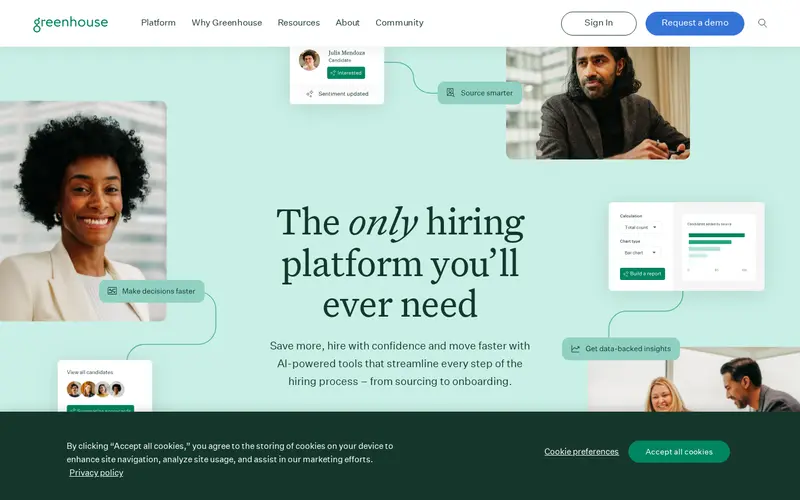
Greenhouse ATS integration capabilities position it as the backbone of modern recruitment operations. Medium businesses choose Greenhouse because it doesn’t operate in isolation—it connects to the tools already running your business.
Eliminate Scheduling Nightmare
Calendar integrations eliminate the scheduling nightmare. Connect Greenhouse to Google Calendar or Outlook, and interview slots populate automatically based on interviewer availability. Candidates select their preferred times through a branded portal. No email chains. No double-bookings. The system handles timezone conversions and sends reminders to all participants.
Streamline Onboarding Process
The Greenhouse ATS integration with HRIS platforms like BambooHR, Workday, and ADP creates a direct pipeline from offer acceptance to first-day readiness. Employee data flows automatically—personal information, compensation details, department assignments. HR teams stop re-entering information that already exists in your ATS. New hires arrive with equipment ordered, accounts provisioned, and onboarding tasks assigned.
Ensure Objective Hiring Decisions
Skills testing integrations separate qualified candidates from resume embellishers. Greenhouse connects with platforms like Codility for technical assessments, Criteria Corp for cognitive testing, and HackerRank for coding challenges. Test invitations trigger automatically when candidates reach specific pipeline stages. Results feed directly into candidate scorecards, giving hiring managers objective data alongside interview feedback.
Build Custom Recruitment Ecosystems
The platform supports over 400 native integrations and offers API access for custom connections. Medium businesses build recruitment ecosystems tailored to their specific workflows without forcing teams to adapt to rigid, one-size-fits-all processes.
Moreover, the flexibility of hybrid processes within the Greenhouse system allows medium businesses to blend traditional recruitment methods with modern digital solutions seamlessly.
2. Lever
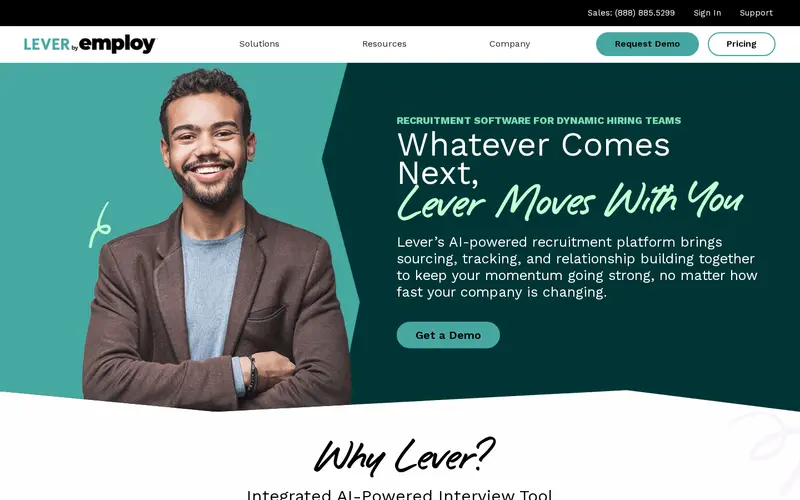
Lever ATS integrations position this platform as a sophisticated solution for medium businesses seeking intelligent automation in their recruitment workflows. The system’s AI-driven candidate sourcing and screening capabilities eliminate hours of manual resume review, automatically identifying qualified candidates based on predefined criteria and historical hiring patterns. This technology doesn’t just match keywords—it understands context, skills adjacency, and potential fit.
Communication tool integrations transform how hiring teams collaborate during the recruitment process. Lever connects directly with Slack, Microsoft Teams, and email platforms, enabling real-time candidate discussions without switching between applications. Hiring managers receive instant notifications about candidate progress, can share feedback within their preferred communication channels, and maintain complete visibility into recruitment pipelines.
The platform’s automated feedback collection system captures structured input from every interviewer immediately after candidate interactions. These insights populate comprehensive reporting dashboards that reveal bottlenecks, identify top-performing sourcing channels, and measure time-to-hire metrics across departments. Decision-makers access data that actually drives strategy adjustments.
Lever ATS integrations extend beyond hiring into operational efficiency through direct syncing with payroll systems like ADP and Gusto, plus benefits administration platforms including Zenefits. Once a candidate accepts an offer, their information flows automatically into these systems, eliminating redundant data entry and reducing onboarding friction. Medium businesses gain the integrated infrastructure typically reserved for enterprise organizations.
Additionally, by incorporating advanced screening features into its ATS, Lever further enhances its recruitment process. These features allow for more precise candidate evaluation and selection, ensuring that only the most suitable candidates move forward in the hiring process.
3. Workday Recruiting
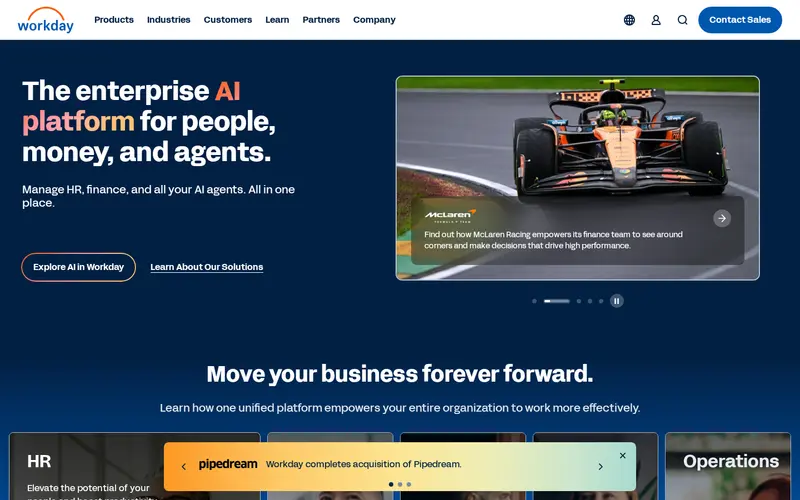
Workday Recruiting ATS integration stands out by linking recruitment directly to enterprise resource planning and financial systems—a feature most medium businesses desperately need but rarely find in standalone ATS platforms. This integration eliminates the data silos that trouble growing companies, where hiring decisions exist in one system while budgets, forecasts, and operational metrics live in another.
The platform automates data flow between recruiting and accounting departments, which proves invaluable for staffing firms and businesses with complex financial reporting requirements. When a candidate accepts an offer, their information flows automatically into payroll systems, benefits administration, and budget tracking tools. No duplicate data entry. No version control nightmares. No spreadsheets passed between departments like some old-fashioned game of telephone.
Workday’s unified dashboards provide operational visibility that transforms how leadership understands hiring impact. Recruitment costs, time-to-fill metrics, and departmental headcount all appear in one place, connected to broader business performance indicators. Decision-makers see exactly how hiring speed affects project timelines and revenue projections.
The compliance and background check integrations built into Workday Recruiting ATS integration address regulatory requirements without creating bottlenecks. Background verification providers connect directly to the platform, triggering checks automatically at predetermined hiring stages. Compliance documentation generates and stores within the same system that houses employee records, creating an audit trail that satisfies both HR teams and legal departments.

4. SmartRecruiters
SmartRecruiters ATS integrations deliver the automation medium businesses need to close candidates faster. The platform connects with e-signature providers like DocuSign and Adobe Sign, eliminating the back-and-forth of paper offers. Candidates sign digitally within minutes, not days. Your offer acceptance rate improves because friction disappears.
The AI-powered interview tools built into SmartRecruiters ATS integrations analyze candidate responses with precision. These tools evaluate communication patterns, technical competency, and cultural alignment—removing guesswork from your shortlisting process. You identify top performers before they reach final interviews, saving hours of unproductive screening calls.
Background verification becomes automatic through integrations with providers like Checkr and Sterling. The moment a candidate accepts an offer, verification triggers without manual intervention. Your compliance team stops chasing paperwork. Your time-to-start shrinks.
Key integration benefits:
- HR platform connectivity syncs new hire data directly into your HRIS, payroll, and benefits systems
- Automated onboarding workflows trigger equipment orders, access provisioning, and training schedules
- Unified candidate records eliminate duplicate data entry across departments
- Real-time status updates keep hiring managers informed without constant check-ins
SmartRecruiters ATS integrations for medium business operations eliminate the administrative burden that slows hiring velocity. Your team focuses on candidate relationships instead of system maintenance.

How AI Enhances ATS Integrations in Hiring Processes
AI interview technology transforms integrated ATS environments by handling tasks that traditionally consumed hours of recruiter time. Automated candidate screening analyzes resumes against job requirements in seconds, flagging top matches based on skills, experience, and qualifications. AI hiring automation extends to interview scheduling, where systems coordinate calendars across multiple stakeholders, send invitations, and manage rescheduling requests without human intervention.
However, the effectiveness of these AI systems heavily relies on their design. As discussed in this article on Entropy AI and Organizations, without a proper design framework, the potential of AI can easily fall apart.
Intelligent recruitment systems deploy AI-driven skills assessments that evaluate candidates through adaptive testing scenarios. These assessments adjust difficulty based on responses, providing accurate measurements of technical competencies and problem-solving abilities. The data feeds directly into shortlisting algorithms, ranking candidates with precision that manual review cannot match.
In a global hiring context, it’s crucial to avoid common pitfalls such as ineffective language testing. Fortunately, AI can help mitigate these issues. For instance, it addresses some of the 7 language testing mistakes that many organizations face.
AI integrations within ATS platforms analyze communication patterns, response times, and engagement metrics to predict candidate quality and cultural fit. Video AI interview tools assess verbal responses, communication style, and subject matter expertise simultaneously, generating comprehensive scorecards that eliminate guesswork from hiring decisions. Background verification processes trigger automatically when candidates reach specific pipeline stages, compressing what used to take days into hours.
Practical Tips for Medium Businesses Implementing ATS Integrations
Start by identifying the areas where your recruitment process is slowing down. Look for places where applications tend to accumulate and tasks that require a lot of manual effort. Make a note of these challenges as they will shape your recruitment strategy and help you prioritize the integrations that are most important.
Focus on integrations that address urgent issues:
- If scheduling interviews takes up too much time for recruiters, it’s essential to connect with calendar tools.
- When candidate information is spread across multiple spreadsheets, integrating with your HRIS system becomes a top priority.
- To speed up the verification of skills, connecting with assessment platforms will provide immediate benefits.
Before making any decisions, it’s crucial to test the capabilities of the integrations. Schedule demonstrations where you can see how data flows between different systems in real-time. Inquire about the reliability of APIs and response times for support. The best ATS for medium businesses won’t just make promises about being able to connect different platforms but will actually show you how smoothly data can be transferred.
Start by implementing one or two key integrations that are critical to your process. Measure how these changes impact the time it takes to hire new candidates. Once you see positive results, you can then expand and introduce more integrations. This step-by-step approach ensures that your team won’t feel overwhelmed and also builds their confidence in using ATS integrations effectively. Keep track of important metrics such as how long it takes to screen candidates and how quickly they respond to communication in order to validate your integration strategies.
FAQs (Frequently Asked Questions)
What is an Applicant Tracking System (ATS) and why is it important for medium businesses?
An Applicant Tracking System (ATS) is a software solution designed to streamline recruitment workflows by centralizing candidate data and automating repetitive hiring tasks. For medium businesses, efficient hiring processes are crucial due to limited resources and time constraints, making ATS essential for faster and easier recruitment.
How do ATS integrations benefit medium business recruitment processes?
Integrating ATS with other business systems accelerates hiring cycles through automated job postings and candidate shortlisting, enhances collaboration among hiring teams via shared platforms, reduces manual errors by syncing data across systems, improves candidate experience with streamlined communication, and results in cost savings by optimizing recruitment operations.
Which are the top ATS solutions recommended for medium businesses with powerful integrations?
The top four ATS solutions for medium businesses include Greenhouse, Lever, Workday Recruiting, and SmartRecruiters. These platforms offer robust integrations such as calendar tools for interview scheduling, HRIS connections for onboarding, AI-driven candidate sourcing, payroll syncing, e-signature platforms, background check automation, and more to enhance hiring speed and ease.
How does AI enhance ATS integrations in the hiring process?
AI plays a pivotal role in automating candidate screening and interview scheduling within integrated ATS environments. It enables intelligent recruitment systems that improve shortlisting accuracy through AI-driven skills assessments and streamlines interview processes using AI-powered tools, thereby making hiring faster and more precise.
What challenges do medium businesses face in recruitment that ATS can address?
Medium businesses often face challenges such as limited resources, time constraints, and manual workload in recruitment. An ATS addresses these issues by centralizing candidate information, automating repetitive tasks like job postings and feedback collection, reducing time-to-hire, improving recruiter productivity, and enhancing overall recruitment efficiency.
What are some practical tips for medium businesses when implementing ATS integrations?
Medium businesses should first assess their current recruitment pain points before selecting an ATS solution. It’s important to choose an ATS that aligns with their specific needs and integrates well with existing business systems. Following integration best practices ensures smoother adoption, maximizes benefits like faster hiring cycles and improved collaboration, and ultimately makes recruitment faster and easier.