

Hiring Is a System, Not a Conversation, yet most companies still treat it like speed dating with higher stakes. You wouldn’t expect a duck to nail Red Bull-fueled parkour, so why expect casual chats to consistently surface top talent? They won’t.
The problem isn’t your instincts. It’s the absence of structure. “Let’s just talk and see what happens” might work for coffee dates, but it’s a disaster for building teams. Every unstructured conversation invites bias, inconsistency, and the dreaded post-hire confusion: “Wait, why did we hire them again?”
A structured hiring approach replaces chaos with clarity. Data-driven hiring replaces gut feel with evidence. Scalable hiring replaces bottlenecks with momentum.
This article dismantles the myth that good hiring happens through conversation alone. You’ll learn how to build a hiring system that’s disciplined, repeatable, and actually works, transforming your process from a caffeine-addled gerbil into a well-oiled machine that scales without losing its soul.
To achieve this, we need to incorporate SME expertise into our hiring process. This will not only streamline the process but also ensure that we are making informed decisions based on expert knowledge.
Moreover, it’s essential to implement measures that prevent fraud and identity issues during the hiring process. By adopting these strategies, we can significantly enhance our hiring system’s effectiveness and reliability.
1. The Flawed Philosophy of Casual Conversations
Casual conversations in hiring feel warm and human. They also produce terrible results.
The myth persists: loosen up the process, grab coffee, let candidates “be themselves,” and you’ll discover hidden gems your competitors miss. This sounds enlightened until you realize what you’re actually doing—replacing systematic evaluation with vibes.
Unstructured chats create perfect conditions for bias to flourish. Without consistent questions or scoring criteria, your brain defaults to pattern matching: Does this person remind me of someone successful I know? The answer depends on shared backgrounds, communication styles, even physical appearance. You’re not evaluating competence; you’re running a compatibility test against your existing team’s demographics.
The “gut feel” approach compounds this problem. When you can’t articulate why you liked a candidate beyond “good energy” or “seemed smart,” you’ve just made a hiring decision based on neurological shortcuts evolved to help you avoid predators, not assess JavaScript proficiency.
The data doesn’t lie: studies consistently show that unstructured interviews have near-zero predictive validity for job performance. You might as well flip a coin, except coins don’t come with confirmation bias that makes you defend bad hires for months.
Every casual conversation you substitute for structured evaluation is a decision to prioritize comfort over outcomes. Your hiring process isn’t therapy—it’s quality control.
2. The Structured Hiring Process: A Step-by-Step Guide
Structured hiring process stages aren’t optional decorations—they’re the load-bearing walls of your talent acquisition architecture. Skip one and watch your hiring quality collapse like wet cardboard.
The Five Non-Negotiable Stages
- Job Posting: Define what you actually need, not what sounds impressive on LinkedIn. Vague requirements attract vague candidates. Specificity filters noise before it floods your inbox.
- Application Screening: This is where documented criteria save you from drowning in resumes. Create knockout questions tied to must-have qualifications. If you’re manually reading every application without filters, you’re cosplaying as productive while accomplishing nothing.
- Interviews: Structure beats spontaneity every single time. Ask the same core questions to every candidate. Use scoring rubrics. Record your evaluations immediately, not three days later when you’ve forgotten which candidate mentioned their “passion for synergy.”
- Assessments: Skills tests, work samples, or structured exercises reveal what conversations cannot. A developer who talks eloquently about React but can’t debug a simple component? The assessment catches that. Always.
- Final Selection: Aggregate your data. Compare scores against predetermined thresholds. Make decisions based on evidence you collected systematically, not the candidate who reminded you of your college roommate.
Why Skipping Stages Guarantees Disaster
Each stage filters different failure modes:
- Skip screening and waste interview time on unqualified candidates.
- Skip assessments and hire smooth talkers who can’t execute.
- Skip structured evaluation and you’ll sit in a conference room six months later asking “Why did we think this person could do the job?”
The “I don’t remember why I hired them” syndrome isn’t a memory problem—it’s a documentation problem. Clear criteria at every stage create an audit trail. When hiring works, you know why. When it fails, you know what to fix. That’s the difference between a system and a series of random conversations that occasionally produce acceptable results.
3. Data-Driven Decision Making: The Magic of Metrics
Your gut feeling hired someone who quit in three months. Your “cultural fit” assessment brought in five clones who all think the same way. The pattern repeats because you’re measuring vibes instead of variables.
Data-driven candidate evaluation metrics transform hiring from a guessing game into a predictable system. Tools like SageScreen cut through the noise with structured scoring that validates every decision against actual performance indicators. No more “he seems nice” justifications in your hiring retrospectives.
The difference between validated data and gut feel? One predicts job success. The other predicts who you’d grab coffee with. These aren’t the same thing, yet most hiring processes treat them identically.
Meaningful metrics that actually matter:

- Response quality scores that measure depth of technical knowledge, not just buzzword density
- Communication clarity ratings based on structured criteria, not whether someone mirrors your speaking style
- Problem-solving approach analysis that reveals how candidates think under pressure, not just what they memorized
- Skill demonstration results tied directly to job requirements, not impressive-sounding credentials
AI-powered systems score these dimensions consistently across every candidate. The same questions. The same evaluation rubrics. The same standards applied whether you’re screening candidate number three or candidate three hundred.
Structured scoring doesn’t eliminate human judgment—it sharpens it. You’re still making the final call, but now you’re working with validated performance indicators instead of reconstructed memories of who smiled more during the interview. The system captures what matters while your brain was busy trying to remember if you asked everyone the same questions.
With [decision scorecards](https://sagescreen.io/tag/decision-scorecards), SageScreen ensures that you’re not just relying on memory but on data that truly reflects a candidate’s potential. This shift towards a more analytical approach in hiring is not just beneficial for recruitment but also for overall business growth and productivity.
To leverage these advanced features, simply create an account on SageScreen and start transforming your hiring process today.
4. Taming the Wild Interview Beast with Structure

Most interviews are glorified improv sessions where interviewers ask whatever pops into their heads and candidates pray they don’t get the “Where do you see ourself in five years?” nonsense. This approach guarantees inconsistency, invites bias, and produces hiring decisions based on whoever told the best story about their college internship.
Structured interviews operate differently. They use predetermined questions tied directly to job requirements, asked in the same order, evaluated against the same criteria. No freestyle. No “let’s just see where the conversation goes.” Every candidate faces the same gauntlet, which means you’re actually comparing apples to apples instead of apples to whatever fruit the interviewer felt like discussing that day.
The backbone of this system? Interview rubrics—scoring frameworks that define what good, mediocre, and poor answers actually look like. When your team knows that a “4” means “provided specific examples with measurable outcomes” and a “2” means “spoke in vague generalities,” you eliminate the guessing game. Everyone evaluates using the same lens, which keeps personal preferences and unconscious bias from hijacking the process.
Here’s what changes:
- Interviewers can’t drift into irrelevant tangents about hobbies or alma maters
- Candidates get evaluated on skills that matter, not charm or cultural similarity
- Hiring committees discuss actual performance data instead of subjective feelings
- Legal exposure drops because your process is defensible and documented
Structure doesn’t kill authenticity—it protects fairness. When you remove the chaos, you create space for genuine signal to emerge. The candidate who interviews well and has the skills rises to the top, not just the one who happened to connect with the interviewer over shared love of craft beer.
5. Leveraging Technology for Scalable Hiring

Applicant tracking systems (ATS) exist because humans are terrible at organizing hundreds of resumes while simultaneously answering Slack messages and pretending to care about quarterly reviews. These platforms categorize, filter, and surface candidates based on actual criteria instead of whoever’s resume happened to land on top of the pile.
The real power emerges when you stop treating your ATS like a glorified filing cabinet. Configure it to track meaningful data points: time-to-hire, source quality, interview-to-offer ratios. These metrics expose bottlenecks you didn’t know existed and patterns you’ve been ignoring.
However, without proper design, these tools can quickly become overwhelming. Scalable hiring technology becomes non-negotiable the moment your volume exceeds what three people can reasonably handle without developing stress-induced eye twitches. AI-powered interviewers maintain consistency across hundreds of candidate screens—same questions, same evaluation criteria, same scoring methodology. No fatigue. No mood swings. No “I’m just not feeling it today” bias creeping into assessments.
Purpose-built tools like SageScreen eliminate the chaos of improvised question banks and subjective gut checks. Every interaction gets structured, scored, and validated against job requirements. You scale without sacrificing quality because the system enforces discipline you can’t manually maintain at volume.
The trap? Buying every shiny tool that promises to “revolutionize” your hiring. Choose platforms designed for clarity and control, not feature bloat. Your tech stack should answer one question: does this make our hiring decisions faster, fairer, and more defensible? If not, you’re just adding complexity to an already messy process.
6. Collaboration Is Key: Aligning Hiring Stakeholders Like a Well-Rehearsed Dance Crew
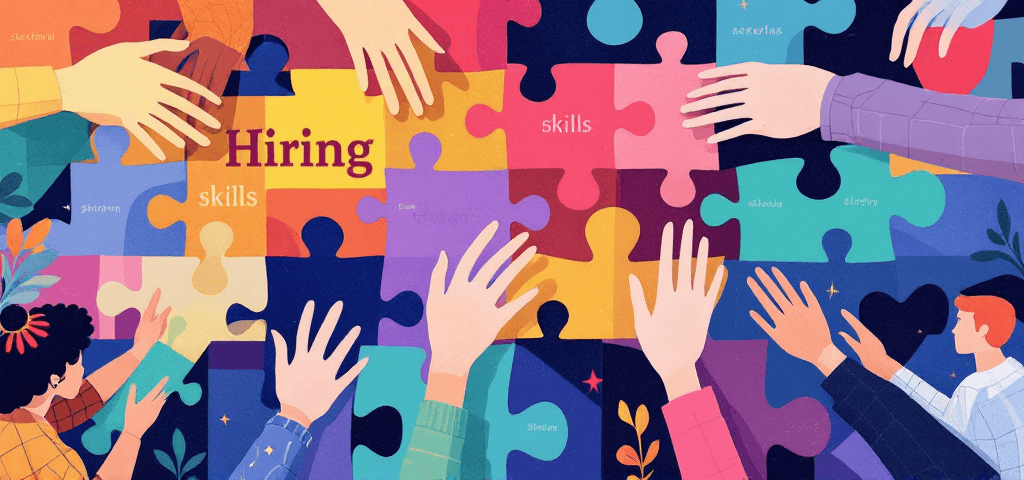
Collaborative hiring falls apart the moment everyone decides their opinion matters more than the system. HR wants culture fit. The hiring manager wants technical chops. The team lead wants someone who won’t ask too many questions. Three different agendas, zero alignment, and suddenly you’re hiring someone nobody actually wanted.
HR alignment starts before the job posting goes live. Sit down—literally, in the same room or Zoom call—and hammer out what success looks like for this role. Not vague aspirations like “team player” or “self-starter.” Concrete, measurable criteria that everyone agrees on. What skills are non-negotiable? What experience level actually moves the needle? Which “nice-to-haves” are just wishful thinking?
When stakeholders align early, you avoid the soul-crushing moment three weeks into the process when someone pipes up: “Wait, they don’t need Python? I thought that was required.” That’s not collaboration. That’s chaos with a conference room.
Hiring Is a System, Not a Conversation means building feedback loops that keep everyone synchronized. After each interview round, collect structured input using the same rubric everyone agreed to upfront. No mystery scoring. No “I just have a feeling” commentary that derails decisions. When feedback follows a consistent format, patterns emerge. You spot red flags faster. You identify strong candidates without endless debate.
The system holds everyone accountable to the criteria you set together. It transforms hiring from a political negotiation into a disciplined evaluation where the best candidate wins—not the one championed by whoever yells loudest.
7. Embracing Diversity, Equity & Inclusion (DEI) Through Structured Systems That Keep Bias Out
Unstructured hiring is bias’s favorite playground. When decisions rest on “culture fit” vibes and post-interview gut checks, you’re essentially letting unconscious bias drive the bus straight into homogeneity. DEI in hiring systems isn’t about checking boxes or meeting quotas—it’s about building processes that force objectivity when human brains default to comfort zones.
How Structured Systems Help
Structured systems strip away the noise. When every candidate faces identical questions scored against predetermined rubrics, you’re comparing apples to apples instead of apples to “that person reminded me of my college roommate.” The difference? One approach evaluates skills and competencies. The other evaluates familiarity.
Here’s what fairness looks like in practice:
- Standardized evaluation criteria applied uniformly across all candidates
- Blind resume reviews that hide demographic markers during initial screening
- Consistent interview frameworks where every candidate gets the same shot to demonstrate capability
- Data-driven scorecards that replace “I liked them” with measurable performance indicators
The Benefits of Diverse Teams
Diverse teams outperform homogeneous ones. This isn’t feel-good corporate speak—it’s backed by decades of research showing that cognitive diversity drives better problem-solving, innovation, and decision-making. You want the smartest team? Build systems that surface talent regardless of background.
Your structured process becomes the bouncer at opportunity’s door, checking credentials instead of checking faces. Tools like SageScreen enforce this discipline automatically, scoring responses against validated criteria rather than interviewer mood or unconscious preference. The result? You hire based on what candidates can do, not who they remind you of.
8. Understanding the Rigorous Hiring System From Candidates’ Perspective: Overcoming Obstacle Courses with Strong Portfolios That Shine Brighter Than Goldfish on Red Bull

Candidates often mistake structured hiring for bureaucratic torture. It’s not. The multiple rounds, the standardized questions, the scored assessments—these aren’t obstacles designed to trip you up. They’re filters built to give everyone the same shot at proving their worth. When companies wing it with casual chats, the loudest voice or the candidate who went to the same college as the hiring manager wins. Structured systems strip away those advantages.
What candidates should focus on:
- Build portfolios that demonstrate actual work, not aspirational buzzwords. Show the code you wrote, the campaign you launched, the problem you solved. Concrete evidence beats “I’m a team player” every single time.
- Prepare for consistency, not curveballs. Structured interviews mean you’ll face the same core questions as every other candidate. This levels the playing field. You know what’s coming—competency-based scenarios, behavioral questions tied to job requirements. Study the job description like it’s a map to buried treasure.
- Understand that scoring isn’t personal. Your answers get evaluated against predefined criteria, not whether the interviewer likes your vibe. This actually works in your favor—your performance speaks louder than your charm.
The candidate experience in structured hiring isn’t about making things harder. It’s about making things fairer. When hiring is a system, not a conversation, you’re judged on what you can do, not who you remind someone of. That’s the difference between getting hired because you’re qualified and getting hired because you’re likable.
Conclusion
Structure doesn’t kill humanity—it amplifies it. Ballerinas rehearse relentlessly before they float across the stage. Your hiring process deserves the same discipline.
Hiring Is a System, Not a Conversation because conversations drift, meander, and forget what mattered five minutes ago. Systems remember. They scale. They protect candidates from bias and protect your company from expensive mistakes dressed up as “culture fit.”
Scalable hiring systems aren’t about replacing humans with robots. They’re about giving humans the tools to make better decisions faster—decisions backed by data, consistency, and fairness instead of whoever had the strongest coffee that morning.
Stop treating hiring like improv theater. Build a system that works when you’re hiring five people or fifty.
Ready to ditch the chaos? SageScreen gives you structured, AI-powered interviews that cut through noise and deliver clarity at scale. No gut feelings. No guesswork. Just hiring that actually works.