
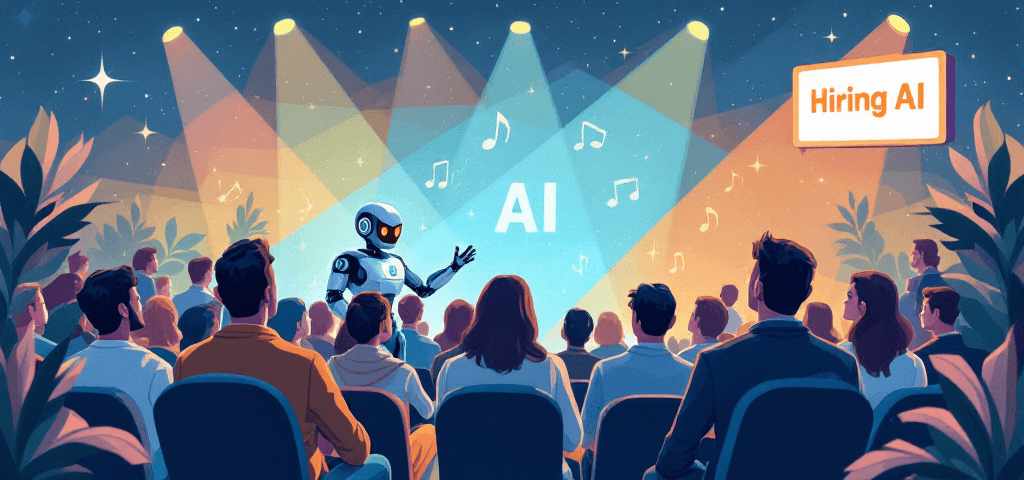
AI Hiring FOMO isn’t just a buzzword—it’s the panic driving recruitment teams to adopt technology they don’t understand, solving problems they haven’t defined. Every LinkedIn post about “AI-powered hiring” triggers the same question: Are we falling behind? This AI Hiring FOMO phenomenon is increasingly influencing hiring strategies.
The recruitment landscape now runs on anxiety. Organizations watch competitors announce AI recruitment hype initiatives and immediately start shopping for their own solutions. The fear isn’t about missing genuine innovation—it’s about appearing outdated.
Here’s what nobody admits: most teams implementing AI hiring tools can’t articulate what specific problem they’re solving. They’re reacting to market noise, not operational needs. The rush to avoid AI FOMO creates a different risk entirely—adopting systems that amplify existing dysfunction, introduce new biases, or simply don’t work as advertised.
Before you panic-purchase another platform, ask whether you’re addressing a real gap or just following the hype. The difference determines whether AI becomes a strategic advantage or an expensive distraction.
Leveraging SME Expertise
To avoid falling into this trap, it’s crucial to leverage SME expertise in your hiring process. This involves understanding your specific needs and finding technology that addresses them effectively rather than just jumping on the latest trend.
Safeguarding Against Fraud and Identity Issues
Additionally, with the rise of AI in recruitment, there’s an increasing risk of fraud and identity issues. It’s essential to implement robust systems that not only streamline hiring but also safeguard against such risks.
Utilizing Effective Recruiter Tools
Utilizing effective [recruiter tools](https://sagescreen.io/tag/recruiter-tools) can significantly improve your hiring process. These tools are designed to enhance efficiency and accuracy in recruitment while aligning with your organization’s unique requirements.
Keeping an Eye on Pricing
Finally, always keep an eye on pricing when considering new platforms. It’s important to ensure that any investment made into AI hiring tools is justified by the value they bring to your organization.
The Allure and Pitfalls of AI in Recruitment
AI adoption in hiring has exploded across every sector. Tech companies, healthcare systems, retail chains, and yes—even nonprofits operating on shoestring budgets—are deploying AI recruitment tools at breakneck speed. The market for these technologies is projected to hit $890 million by 2028, and the tools themselves have become increasingly accessible.
The Typical AI Hiring Stack

The typical AI hiring stack now includes:
- Applicant Tracking Systems (ATS) with AI-powered resume parsing and candidate ranking
- AI-generated job descriptions that promise to eliminate bias and optimize for searchability
- AI-assisted interview platforms that analyze speech patterns, facial expressions, or text responses
- Automated scheduling and communication tools that handle candidate correspondence
As AI continues to evolve, it is profoundly changing the way we work and live. Emerging trends such as generative AI are reshaping industries by enabling new forms of creativity and productivity. For instance, in the realm of content creation, generative AI tools can produce written articles, design graphics, and even compose music, allowing professionals to focus on higher-level strategic tasks.
This shift is also reflected in hiring technologies. As companies adopt AI-driven solutions like those in the typical AI hiring stack, they are not only streamlining processes but also redefining what skills are necessary in the workforce. The ability to work alongside AI tools becomes increasingly important, as routine tasks are automated and new roles emerge that require a deeper understanding of technology and data analysis.
Moreover, generative AI’s capability to create personalized experiences is influencing how organizations approach talent acquisition. For example, AI-generated job descriptions can be tailored to specific demographics, ensuring that they attract a diverse pool of candidates while minimizing bias.
As these trends continue to unfold, it’s essential for both employers and job seekers to stay informed about the latest advancements in AI and their implications for the future of work.
The Seductive Pitch of AI in Recruitment
The pitch is seductive:
- Cut screening time by 75%.
- Reduce time-to-hire from weeks to days.
- Free your HR team from the soul-crushing monotony of reviewing 300 resumes for a single position.
- Eliminate unconscious bias.
- Make data-driven decisions instead of relying on gut instinct.
These aren’t empty promises. Efficiency in hiring genuinely improves when AI handles repetitive administrative tasks.
The Problem with AI Implementation in Recruitment
However, the problem isn’t the technology itself—it’s the implementation gap that often accompanies it. Organizations rush to deploy AI recruitment tools without understanding what they’re actually buying. They skip the pilot phase, neglect to train their teams, and fail to establish clear success metrics before flipping the switch.
The Consequences of Poor Implementation
The result? Systems that filter out qualified candidates based on arbitrary keyword matches. Chatbots that frustrate applicants with robotic responses. Interview analysis tools that penalize candidates for regional accents or neurodivergent communication styles.
Limitations of AI in Recruitment
Moreover, while AI can streamline certain aspects of recruitment, it’s essential to recognize its limitations, especially when it comes to global hiring and language testing. Misapplication of AI tools can lead to a myriad of issues, further complicating the hiring process.
The Shift in Burnout
The burnout you’re trying to solve doesn’t disappear—it just shifts from manual resume review to troubleshooting broken automation and fielding complaints from candidates who feel dehumanized by your hiring process. This highlights the importance of a well-thought-out sustainability strategy in AI implementation.
Bridging the Gap Between Hype and Reality: A Strategic Approach to AI Hiring FOMO

The risks of following AI hiring hype without strategy manifest in predictable patterns. Teams scramble to implement tools they don’t understand, creating more work than they eliminate. Your recruiters spend hours troubleshooting platforms that promised to “automate everything.” Your hiring managers receive candidate reports they can’t interpret. Your HR director fields anxious questions about whether AI will replace human roles.
This isn’t innovation. It’s chaos with a subscription fee.
Burnout from technology adoption hits hardest when organizations deploy AI as a blanket solution rather than a targeted instrument. A nonprofit adopts an AI screening tool without defining what “qualified” means for their unique mission. A startup implements automated interviews but hasn’t trained anyone to validate the outputs. A mid-sized company purchases an AI-powered ATS that requires three times the data entry of their previous system.
The productivity loss compounds daily:
- Recruiters waste time correcting AI-generated job descriptions that miss the mark
- Hiring managers review candidates flagged by algorithms they don’t trust
- HR teams field complaints about impersonal, bot-driven candidate experiences
- Leadership questions ROI on tools that haven’t reduced time-to-hire
Job insecurity perceptions spread when staff see AI positioned as their replacement rather than their support system. Your team needs to understand which tasks AI handles and why their expertise remains irreplaceable.
Start with specific use cases. Identify one bottleneck in your hiring process. Define success metrics before selecting any tool. Test with a pilot group. Measure actual outcomes against promised ones. Scale only what works.
Real-World Examples of Successful AI Integration in Hiring
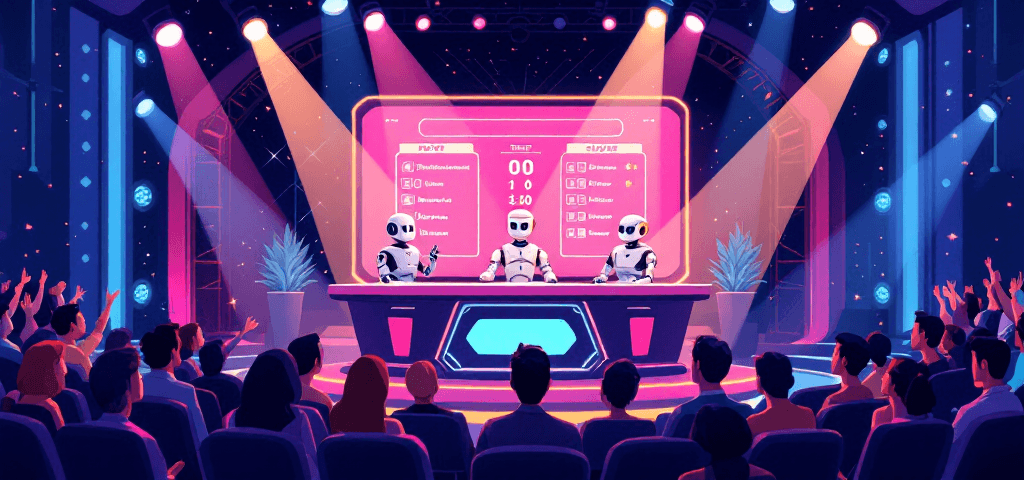
SageScreen exemplifies measured tech adoption in recruitment through its structured candidate screening framework. Instead of replacing recruiters with black-box algorithms, it provides purpose-built AI interviewers that conduct standardized assessments. Every interaction follows validated protocols, generates scored evaluations, and maintains consistency across hundreds of candidates. The system doesn’t make hiring decisions—it eliminates noise and surfaces signal so human decision-makers can act faster with better data.
This approach addresses the core problem most organizations face: not whether to use AI, but how to deploy it without creating new bottlenecks or compromising quality. SageScreen’s architecture demonstrates that effective AI hiring tools like ChatGPT and Claude should enhance existing workflows rather than demand wholesale process redesigns. You can read more about their changelog for insights into the continuous improvements being made.
Beyond structured screening, successful AI integration appears across different hiring stages when organizations resist the urge to automate everything:
- Resume parsing with human review checkpoints: AI extracts and categorizes candidate information from resumes, but recruiters validate matches against actual job requirements before advancing candidates
- Skill assessment platforms with adaptive testing: Systems like Codility or HackerRank adjust question difficulty based on candidate responses, then provide detailed performance analytics for hiring managers to interpret
- Scheduling automation with personalization layers: Tools handle calendar coordination while recruiters craft customized communication that maintains candidate experience quality
The pattern across these examples? Technology handles repetitive, high-volume tasks while humans retain control over judgment calls and relationship management. This division of labor represents the future of fair hiring practices—not because it’s idealistic, but because it’s the only configuration that actually works at scale without generating legal exposure or candidate resentment.
For those interested in exploring how to effectively implement such strategies in their own organizations, SageScreen offers valuable resources on how to deploy AI in hiring which can be found on their website. Additionally, candidates looking for a streamlined application process can benefit from the candidate landing page which provides a user-friendly interface for managing applications. Modern solutions like Gemini also play a crucial role in enhancing these processes by offering advanced analytics and insights.
Navigating Challenges and Ethical Considerations: Ensuring Responsible Use of AI in Recruitment

Bias doesn’t disappear just because you automated it. AI systems like ChatGPT 5 and Claude 4.5 Sonnet learn from historical data, which means they inherit whatever prejudices existed in your past hiring decisions. The algorithm that screens out candidates based on “cultural fit” might be systematically excluding people from specific neighborhoods, universities, or demographic groups. You won’t know unless you audit it.
The challenges with bias mitigation through algorithms run deeper than most vendors admit. Machine learning models optimize for patterns, not fairness. If your organization historically hired more men for technical roles, the AI will learn that men are “better fits” for those positions. The system becomes a bias amplification machine wrapped in the legitimacy of “objective” scoring.
Legal implications of automated decision-making aren’t theoretical anymore. The EU’s AI Act classifies hiring systems as high-risk applications requiring strict compliance measures. New York City’s Local Law 144 mandates bias audits for automated employment decision tools, which can include analyzing decision scorecards to understand how decisions are made. Illinois requires consent before using AI for video interviews. Violate these regulations and you’re looking at fines, lawsuits, and public relations disasters.
The real danger isn’t the technology itself—it’s the accountability gap. When an AI system like ChatGPT 5 rejects qualified candidates, who takes responsibility? The vendor blames the training data. Your team blames the vendor. Meanwhile, discriminatory patterns persist because no one owns the outcome.
Transparency matters more than efficiency. If you can’t explain why the AI scored a candidate a certain way, you can’t defend that decision in court or to the candidate themselves. Black-box algorithms might process applications faster, but they also create legal exposure you can’t quantify until it’s too late.
Conclusion
The question isn’t whether to adopt AI in hiring—it’s whether you’re doing it for the right reasons. Implementing AI out of fear of missing out (FOMO) creates exactly the problems you’re trying to solve: wasted resources, frustrated teams, compromised candidate experience.
Set realistic expectations for tech adoption in recruitment. Start with one broken process. Measure actual outcomes, not theoretical efficiency gains. Tools like SageScreen work because they solve a specific problem—inconsistent screening—without pretending to replace human judgment entirely.
Your competitors rushing to implement every AI tool aren’t necessarily ahead. They might just be louder about their mistakes. Test deliberately. Validate rigorously. Scale only what works.
The real competitive advantage? Knowing when to say no.